Skip to content
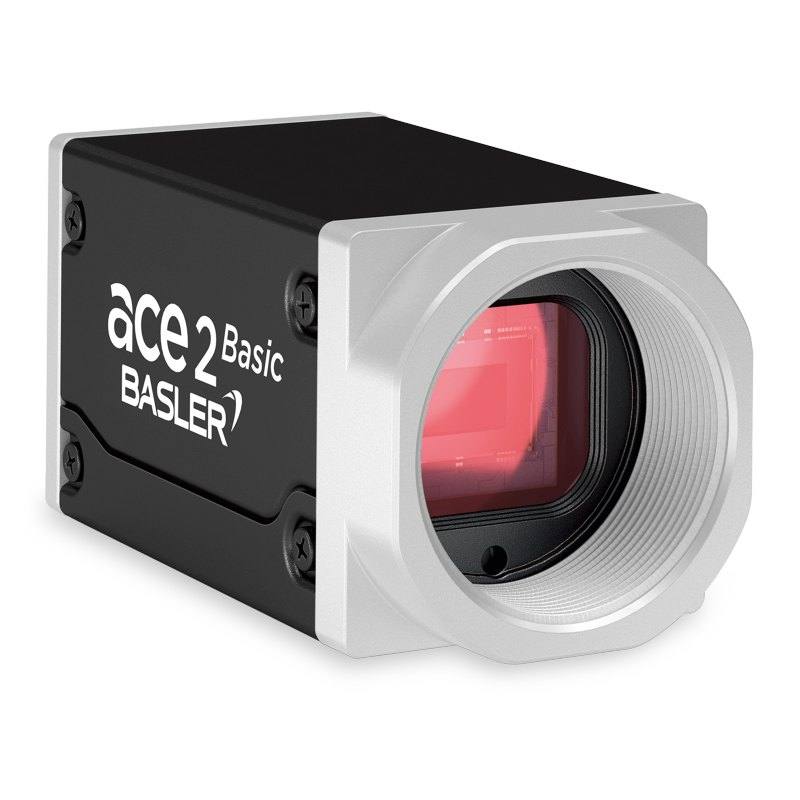
Basler a2A2048-114g5c machine vision camera
  • Rosepetal compatible
  • Recommended by AIS Vision

Basler ace 2 a2A2048-114g5cBAS

a2A2048-114g5c

The Basler a2A2048-114g5cBAS is an ace 2 series industrial area scan camera built around the 1/3.1" Sony IMX900 progressive scan CMOS sensor with a global shutter, delivering 2064 x 1552 (3.2 MP) color images at up to 114 fps (115 fps at 8-bit). It uses a 5GigE (5 Gbit/s) interface with backward-compatible NBASE-T support down to Fast Ethernet, GigE Vision 2.0 and GenICam compliance, and a C-mount lens mount. The 2.25 um pixel sensor covers the visible and NIR spectrum and the camera is powered with 12-24 VDC via its M8 I/O connector. The compact box housing weighs about 105 g, is rated IP30, and operates from -10 to 50 C.

Brand
Basler
Camera type
Area scan
Interface
5GigE (5 Gbit/s, NBASE-T)
Resolution
3.2 MP
Horizontal resolution
2064 x 1552 px
Mono / color
Color (visible + NIR)
Sensor manufacturer
Sony (IMX900)
Sensor model
Sony IMX900-AQR-C
Shutter
Global shutter
FPS
Up to 114 fps (115 fps at 8-bit)
Mount
C-mount
Sensor size
1/3.1" (5.81 mm diagonal, 4.61 x 3.46 mm)

Technical overview

The Basler ace 2 a2A2048-114g5cBAS is an area scan camera built around the 1/3.1-inch Sony IMX900 progressive-scan CMOS sensor, delivering 2064 x 1552 px (3.2 MP) color images. The defining trait for an installer is the global shutter paired with up to 114 fps (115 fps at 8-bit): every pixel is exposed simultaneously, so fast-moving parts on a conveyor, indexing turntable, or robot end-effector are captured without the geometric skew that a rolling shutter introduces. That combination of moderate resolution and high frame rate makes this a throughput-oriented sensor rather than a fine-detail metrology sensor, well suited to in-motion inspection, code reading, and pick rates where you need many frames per second over a working field rather than tens of megapixels of static detail.

The 2.25 x 2.25 um pixels sit on a small 5.81 mm diagonal (4.61 x 3.46 mm) sensor, which keeps the camera compact (62.2 x 29 x 29 mm, 105 g box housing) and works comfortably with affordable C-mount optics. Because the pixels are small, lens selection matters: choose a C-mount lens that resolves to the 2.25 um pitch and covers at least the 1/3.1-inch format so corners stay sharp, and size focal length to your field of view and working distance. The sensor is color and sensitive across the visible and NIR range, so it can be paired with white, red, or near-infrared illumination depending on whether you are reading color cues, maximizing contrast, or imaging through certain materials. Global shutter also enables clean strobe/flash synchronization, letting you freeze motion with a short, bright light pulse triggered per frame.

Connectivity is 5GigE running at 5 Gbit/s over standard Cat-class copper, with backward-compatible NBASE-T negotiation down to Fast Ethernet. It is GigE Vision 2.0 and GenICam compliant, so it drops into any standard vision software stack and reuses existing Ethernet cabling and switch infrastructure for runs longer than USB allows, without a frame grabber. The camera is powered at 12-24 VDC supplied only through the M8 I/O connector (not via the network port), draws about 5.2 W, and carries the M8 lines for external trigger and strobe. It is rated IP30 and operates from -10 to 50 C, so it expects a relatively clean, controlled enclosure rather than a washdown or heavily contaminated location.

Best for

  • In-motion defect and surface inspection on conveyors where the global shutter freezes moving parts at up to 114 fps without rolling-shutter distortion
  • High-throughput 1D/2D code reading and traceability on packaging and logistics lines that need many frames per second at moderate resolution
  • OCR/OCV of printed text, lot codes, and date marks where color and NIR sensitivity help separate print from substrate
  • Robot guidance and pick-and-place at fast cycle rates, using 5GigE cabling to reach the cell without a frame grabber
  • Packaging and food/beverage sorting where color cues and high frame rates support fast reject decisions

Selection notes

  • Power is delivered only through the M8 I/O connector at 12-24 VDC, not Power-over-Ethernet, so plan a separate DC supply and the matching M8 cable at each camera position.
  • The small 2.25 um pixels on a 1/3.1-inch sensor demand a C-mount lens that both resolves to that pitch and covers the format; an under-spec lens will soften corners and waste the sensor's resolution.
  • To use the full 5 Gbit/s bandwidth you need a 5GigE / NBASE-T capable NIC or switch and appropriate cabling; on slower Ethernet infrastructure the link negotiates down (to as low as Fast Ethernet) and frame rate is limited accordingly.
  • IP30 and the -10 to 50 C range mean this is for clean, temperature-controlled enclosures; harsh, wet, or dusty stations need an external housing.
  • This is a 3.2 MP color sensor optimized for speed; if the task is fine-detail metrology or large-field high-resolution inspection, a higher-megapixel model is the better fit, whereas a monochrome variant would give more light sensitivity if color is not required.

Specifications: General
BrandBasler
Camera typeArea scan

Specifications: Sensor
Resolution3.2 MP
Horizontal resolution2064 x 1552 px
Mono / colorColor (visible + NIR)
Sensor manufacturerSony (IMX900)
Sensor modelSony IMX900-AQR-C
ShutterGlobal shutter
Sensor size1/3.1" (5.81 mm diagonal, 4.61 x 3.46 mm)
Pixel size2.25 x 2.25 um

Specifications: Performance
FPSUp to 114 fps (115 fps at 8-bit)

Specifications: Interface
Interface5GigE (5 Gbit/s, NBASE-T)
ProtocolsGigE Vision 2.0, GenICam

Specifications: Optics
MountC-mount

Specifications: Electrical
Power12-24vdc (range), supplied only via M8 I/O connector
Power consumption5.2 W

Specifications: Environment
IP ratingIP30
Operating temperature-10 to 50 °C

Specifications: Mechanical
Housing materialBox
Dimensions62.2 x 29 x 29 mm
Weight105 g

Frequently asked questions

Related technical guides

Rosepetal · AI

Test this camera with Rosepetal

Validate your visual inspection with AI: send us sample images and we evaluate the case on your hardware.

AIS Vision · Integration

We validate camera + lens + lighting

AIS Vision defines and tests the optimal combination of camera, optics and lighting for your application before you buy.