Skip to content
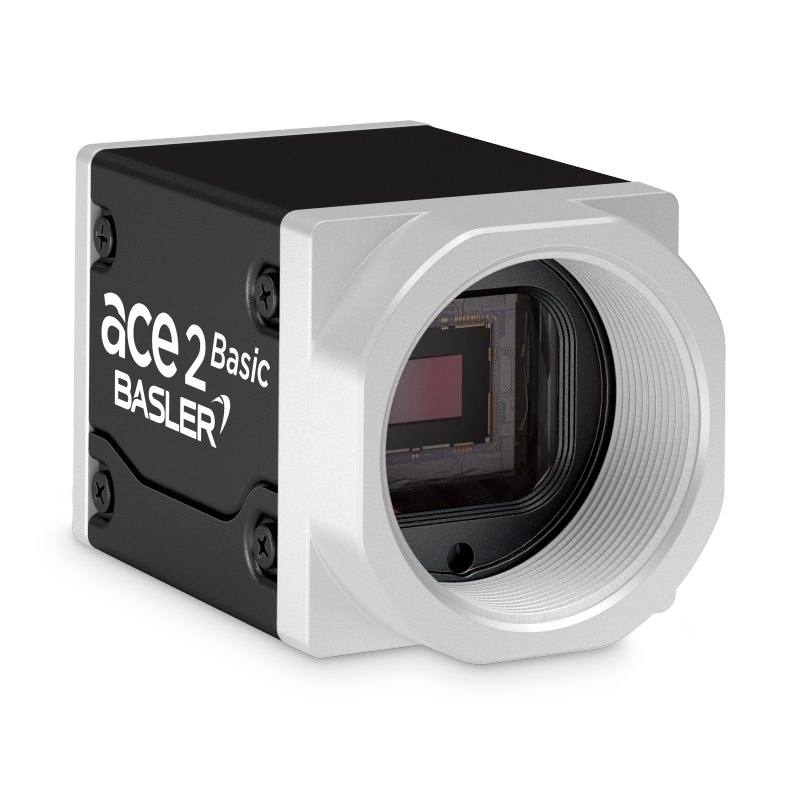
Basler a2A3840-45um machine vision camera
  • Rosepetal compatible
  • Recommended by AIS Vision

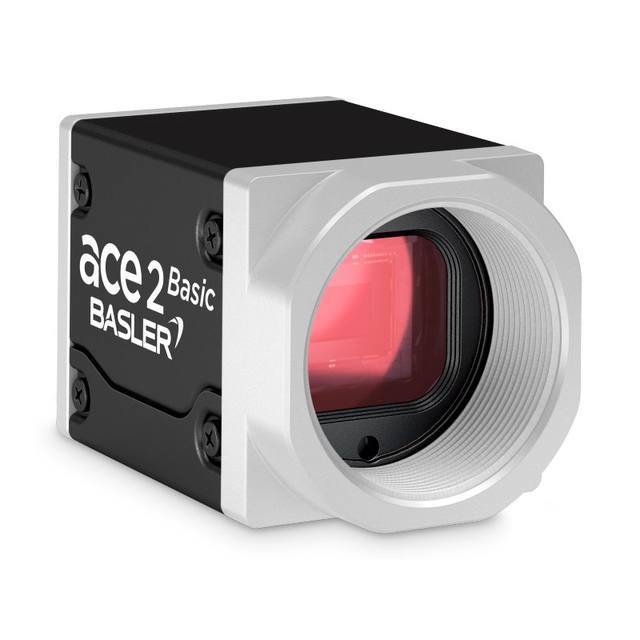
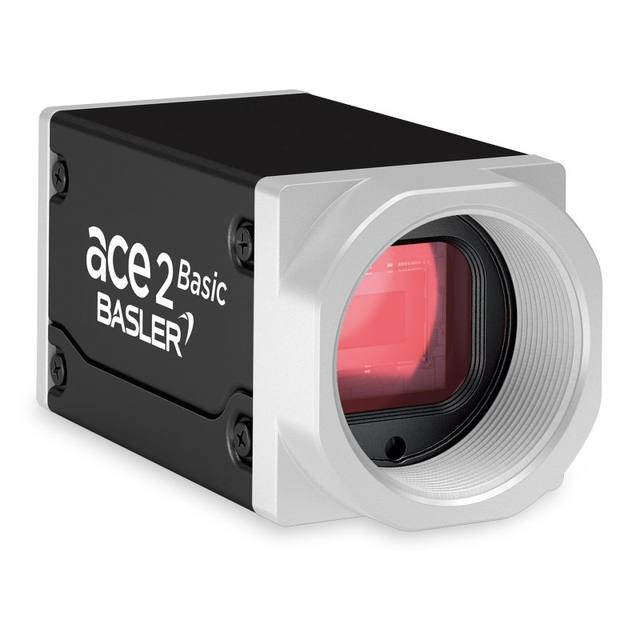
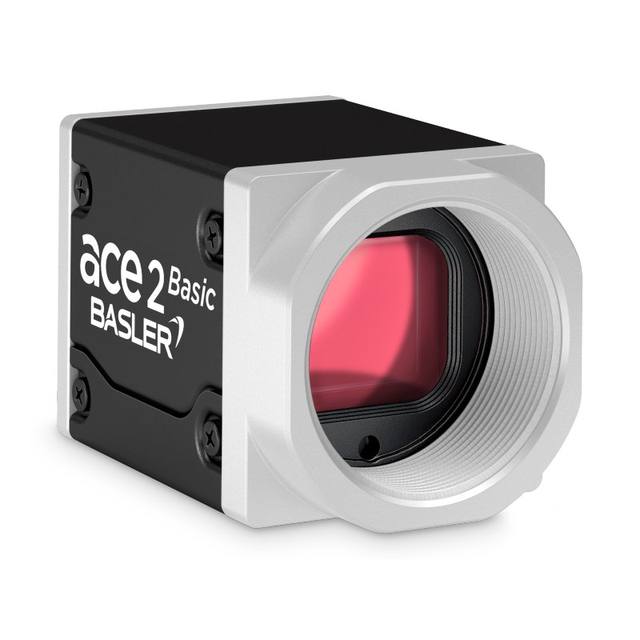
Basler ace 2 a2A3840-45um (USB3, 8.3 MP Mono)

a2A3840-45um

The Basler a2A3840-45um (ace 2 R, BAS variant) is a USB 3.0 industrial area scan camera built around the 1/1.8-inch Sony IMX334 monochrome CMOS sensor, delivering 3840 x 2160 px (8.3 MP) at up to 45 fps with 2.0 x 2.0 um pixels. It uses a rolling shutter, supports 8/10/12-bit output, and is powered directly over the USB 3.0 interface at about 2.5 W typical. The camera ships in a compact 42.8 x 29 x 29 mm C-mount housing and is compliant with the USB3 Vision and GenICam standards.

Brand
Basler
Camera type
Area scan
Interface
USB 3.0 (USB3 Vision)
Resolution
8.3 MP
Horizontal resolution
3840 px
Mono / color
Mono
Sensor manufacturer
sony_starvis (Sony IMX334 CMOS, STARVIS)
Sensor model
Sony IMX334
Shutter
Rolling shutter
FPS
45 fps
Mount
C-mount
Sensor size
7.7 mm x 4.3 mm (1/1.8")

Technical overview

The Basler a2A3840-45um is an 8.3 MP area scan camera from the ace 2 family, built around the 1/1.8-inch Sony IMX334 monochrome CMOS sensor. It delivers a native 3840 x 2160 px frame at up to 45 fps over a USB 3.0 (USB3 Vision) interface, with very fine 2.0 x 2.0 um pixels that pack 8.3 megapixels onto a 7.7 x 4.3 mm imaging area. For an installer, that combination means a lot of spatial detail in a single grab: as an illustration, framing a 384 mm field of view across the 3840-pixel width resolves to roughly 0.1 mm per pixel, so the camera is well suited to inspection tasks where you need to see small features across a wide part without tiling multiple lower-resolution cameras. The monochrome sensor is the right choice for measurement, contrast and defect work, since it puts every photosite toward luminance rather than splitting it across a color filter array, giving sharper edges and better sensitivity for the same exposure.

The sensor uses a rolling shutter rather than a global shutter, which is the single most important design-in fact on this camera. Rolling shutter exposes the 2160 rows sequentially, so any relative motion between the part and the camera during the frame readout can skew or smear fast-moving features. This camera is therefore at its best on stationary or slow-moving subjects: parts indexed and stopped under the camera, web or conveyor work where motion is modest, or applications where you can freeze motion with a short, bright strobe of light timed to the exposure. Where parts are moving quickly past the lens, a global-shutter sensor avoids the geometric distortion that rolling shutter can introduce. The camera supports 8/10/12-bit output, so you can trade bandwidth for grayscale depth, choosing 12-bit when subtle surface-contrast gradients matter and 8-bit when you want maximum throughput.

On the integration side this is a compact, low-power, bus-powered camera: it draws about 2.5 W typical entirely over the USB 3.0 cable, so no separate power supply is needed for power, and the whole module is just 42.8 x 29 x 29 mm and 85 g. The C-mount accepts a wide range of standard machine-vision lenses, but because the pixels are only 2.0 um, you must pair it with a high-resolution lens that can actually resolve at that pitch, otherwise the optics, not the sensor, will limit sharpness. USB3 Vision and GenICam compliance mean it drops into standard vision software stacks (Basler pylon and third-party GenICam libraries) without custom drivers. The -10 to 60 degC operating range covers most factory-floor enclosures. USB 3.0 keeps cabling short and simple but is a point-to-point host connection, so plan one camera per USB controller and keep cable runs within passive USB3 limits or use active extension.

Best for

  • High-resolution surface and defect inspection on stationary or indexed parts, where 8.3 MP across a wide field reveals small flaws without multi-camera tiling
  • Industrial OCR/OCV and printed-code reading on labels and packaging, where the fine 2.0 um pixels and monochrome contrast resolve small characters
  • Dimensional measurement and gauging of static parts, using the high pixel count to hold tight per-pixel resolution over a large field of view
  • Traceability and 1D/2D code verification on slow-moving or stopped product, paired with a short strobe to freeze any residual motion
  • Compact, bus-powered vision stations in electronics, packaging, food and beverage, automotive, logistics, or printing lines where a single USB 3.0 cable simplifies wiring

Selection notes

  • Confirm the application tolerates a rolling shutter: for fast continuous motion, expect possible geometric skew, and either stop the part, slow the line, or freeze motion with a timed strobe; choose a global-shutter camera if distortion-free capture of fast motion is mandatory
  • Budget USB 3.0 architecture early: it is a point-to-point host link, so allocate a dedicated USB controller per camera, keep passive cable runs short, and use active USB3 extension or a host card with enough bandwidth for sustained 45 fps
  • Specify a high-resolution C-mount lens matched to the 2.0 um pixel pitch and the 1/1.8-inch (7.7 x 4.3 mm) sensor; a soft or undersized-format lens will throttle the effective resolution and may vignette the corners
  • Plan lighting around the monochrome sensor and rolling shutter: strong, even, well-aimed illumination lets you use short exposures, improves contrast for defect and code work, and lets a strobe double as a motion-freeze tool
  • Decide on bit depth versus throughput: 12-bit gives more grayscale headroom for subtle surface gradients but increases data volume, while 8-bit maximizes frame rate and lowers USB bandwidth demand

Specifications: General
BrandBasler
Camera typeArea scan

Specifications: Sensor
Resolution8.3 MP
Horizontal resolution3840 px
Mono / colorMono
Sensor manufacturersony_starvis (Sony IMX334 CMOS, STARVIS)
Sensor modelSony IMX334
ShutterRolling shutter
Sensor size7.7 mm x 4.3 mm (1/1.8")
Pixel size2.0 um x 2.0 um

Specifications: Performance
FPS45 fps

Specifications: Interface
InterfaceUSB 3.0 (USB3 Vision)
ProtocolsUSB3 Vision, GenICam

Specifications: Optics
MountC-mount

Specifications: Electrical
PowerVia USB 3.0 interface, ~2.5 W typical
Power consumption2.5 W

Specifications: Environment
Operating temperature-10 to 60 degC

Specifications: Mechanical
Dimensions42.8 x 29 x 29 mm
Weight85 g

Frequently asked questions

Related technical guides

Rosepetal · AI

Test this camera with Rosepetal

Validate your visual inspection with AI: send us sample images and we evaluate the case on your hardware.

AIS Vision · Integration

We validate camera + lens + lighting

AIS Vision defines and tests the optimal combination of camera, optics and lighting for your application before you buy.