Skip to content
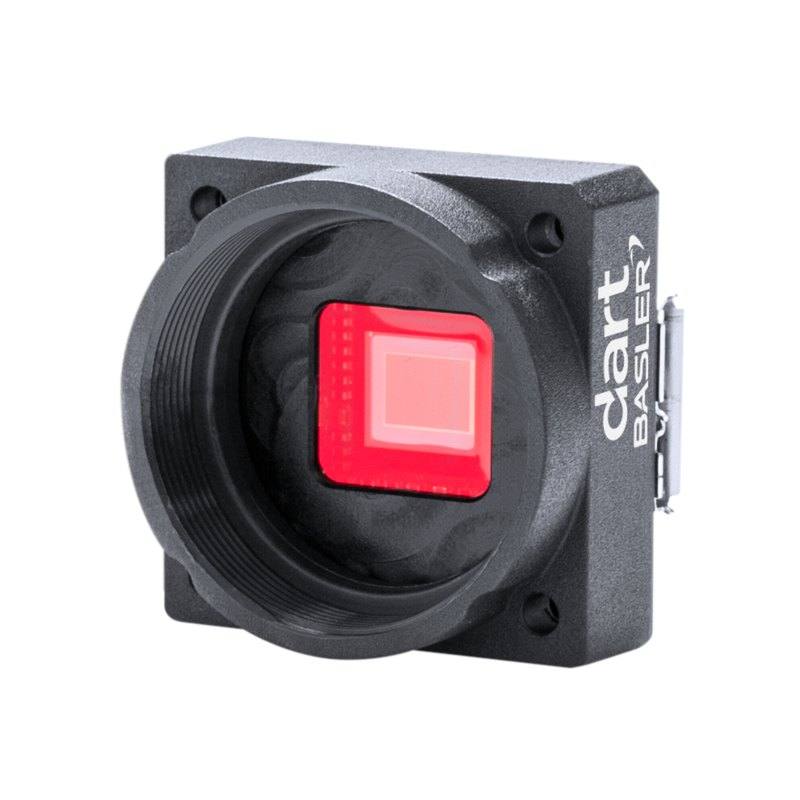
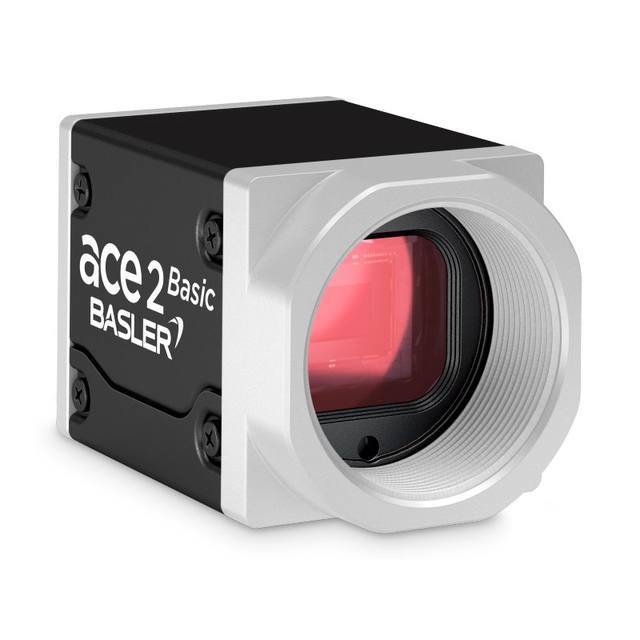
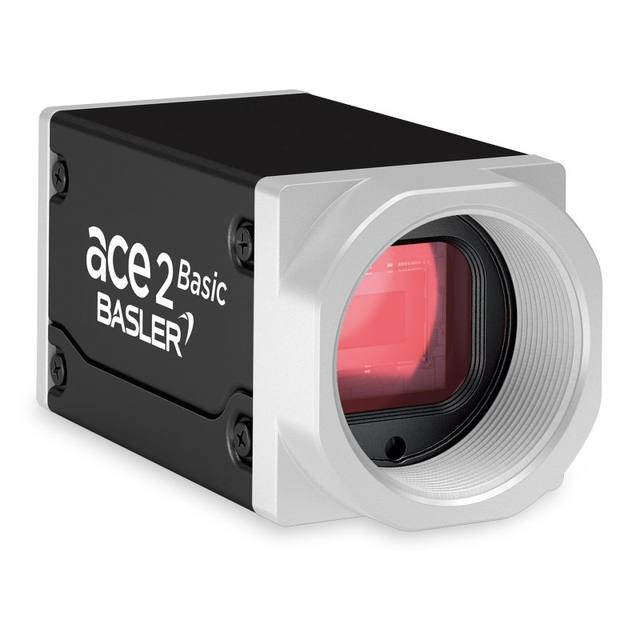
Basler daA1600-60uc machine vision camera
  • Rosepetal compatible
  • Recommended by AIS Vision

Basler dart Classic daA1600-60uc

daA1600-60uc

The Basler daA1600-60uc is a compact USB3 Vision area scan camera in the dart Classic board-level family, using a 1/1.8" e2v EV76C570 global shutter CMOS sensor with 4.5 x 4.5 um pixels. It captures 1600 x 1200 px (2 MP) color images at up to 60 fps over a USB 3.0 SuperSpeed (5 Gbit/s) interface and is bus-powered, consuming roughly 1.3 W typical at 5 VDC. It is offered as a bare board or with S-mount and CS-mount lens options, weighs under 15 g (mounted), and complies with USB3 Vision and GenICam standards. The camera targets machine vision, factory automation, print inspection, microscopy, biometrics and embedded/space-constrained imaging applications.

Brand
Basler
Camera type
Area scan
Interface
USB 3.0 (USB3 Vision, 5 Gbit/s SuperSpeed)
Resolution
2 MP
Horizontal resolution
1600 x 1200 px
Mono / color
Color
Sensor manufacturer
Teledyne e2v
Sensor model
e2v EV76C570
Shutter
Global shutter
FPS
60 fps
Mount
CS-mount, S-mount, or bare board (no mount)
Sensor size
1/1.8" (7.2 mm x 5.4 mm, 9 mm diagonal)

Technical overview

The Basler dart Classic daA1600-60uc is a 2 MP color area scan camera built around a 1/1.8" Teledyne e2v EV76C570 CMOS sensor with a true global shutter and 4.5 x 4.5 um pixels. The global shutter is the defining trait here: every pixel is exposed simultaneously, so moving parts on a conveyor, indexing turntable or robot end-effector are captured without the skew and smear that a rolling shutter introduces. At full 1600 x 1200 resolution the camera runs up to 60 fps, which gives an installer real headroom for triggered grab-on-the-fly inspection rather than stop-and-stare stations. The 9 mm sensor diagonal across a 7.2 x 5.4 mm active area, combined with 4.5 um pixels, sets the optical math: pair it with a lens whose image circle covers 1/1.8" to use the full frame and avoid vignetting.

The interface is USB 3.0 in USB3 Vision form, running at 5 Gbit/s SuperSpeed, and the camera is bus-powered, drawing roughly 1.3 W typical at 5 VDC. For the installer this means a single cable carries both data and power, eliminating the separate power supply and trigger-power wiring a GigE or CoaxPress build often needs. USB3 Vision also keeps latency low and deterministic over short cable runs, which suits a PC-based or embedded host sitting close to the camera; just budget for passive USB3 cable lengths (typically a few metres) or active/repeater cabling for longer pulls. Compliance with USB3 Vision and GenICam means it drops into standard vision libraries and Basler's pylon stack without custom drivers, and exposes standard features for exposure, gain and trigger configuration.

Physically this is a board-level camera: a bare board around 20 x 29 x 29 mm weighing about 15 g, available bare or with S-mount or CS-mount lens options. That form factor is built for space-constrained and embedded integration inside enclosures, handheld devices, microscopes or compact multi-camera rigs where a boxed C-mount camera would not fit. Because it is a color sensor, it is the right choice when the inspection depends on color cues, print verification, label color, or material grading, rather than pure contrast. For demanding or fast-moving tasks, plan to pair the short exposures the global shutter enables with strobed or continuous illumination strong enough to freeze motion, and drive it from a hardware trigger synchronized to the lighting and the part-present signal.

Best for

  • Print and label inspection where color fidelity and accurate registration matter, using the color sensor with strobed lighting
  • Embedded and space-constrained vision builds (handheld devices, microscopes, compact multi-camera rigs) that need the board-level 15 g form factor
  • Conveyor and grab-on-the-fly inspection of moving parts, where the global shutter prevents motion distortion at up to 60 fps
  • Packaging and electronics defect inspection where 2 MP color images feed an AI or rule-based classifier
  • Robot-guidance and pick stations needing distortion-free frames of parts in motion over a single bus-powered USB3 cable

Selection notes

  • This is a 2 MP (1600 x 1200) sensor: confirm that resolution resolves your smallest feature across the required field of view before designing in; it is not a high-resolution camera and will limit fine-defect detection on large parts.
  • Match the lens to the 1/1.8" format and 4.5 um pixel pitch, and pick a mount (CS-mount, S-mount, or bare board) consistent with your housing; S-mount and bare-board options exist specifically for embedded packaging.
  • Plan USB 3.0 cabling for the host distance: SuperSpeed at 5 Gbit/s wants short passive runs, so position the PC or embedded host nearby or specify active/repeater cabling for longer reaches.
  • Bus power (~1.3 W at 5 VDC) means no separate supply, but verify the host's USB3 port and any hub can deliver clean power for a board-level camera, especially in multi-camera setups.
  • Operating range is 0 to 50 C and the housing is board-level with no enclosure, so provide mechanical mounting, ESD handling and thermal/airflow consideration inside your own enclosure.

Specifications: General
BrandBasler
Camera typeArea scan

Specifications: Sensor
Resolution2 MP
Horizontal resolution1600 x 1200 px
Mono / colorColor
Sensor manufacturerTeledyne e2v
Sensor modele2v EV76C570
ShutterGlobal shutter
Sensor size1/1.8" (7.2 mm x 5.4 mm, 9 mm diagonal)
Pixel size4.5 x 4.5 um

Specifications: Performance
FPS60 fps

Specifications: Interface
InterfaceUSB 3.0 (USB3 Vision, 5 Gbit/s SuperSpeed)
ProtocolsUSB3 Vision, GenICam

Specifications: Optics
MountCS-mount, S-mount, or bare board (no mount)

Specifications: Electrical
PowerBus-powered via USB 3.0 (~1.3 W typ. @ 5 VDC)

Specifications: Environment
Operating temperature0 to 50 °C

Specifications: Mechanical
Dimensions~20 x 29 x 29 mm
Weight15 g
Housing materialBoard level

Frequently asked questions

Related technical guides

Rosepetal · AI

Test this camera with Rosepetal

Validate your visual inspection with AI: send us sample images and we evaluate the case on your hardware.

AIS Vision · Integration

We validate camera + lens + lighting

AIS Vision defines and tests the optimal combination of camera, optics and lighting for your application before you buy.