Skip to content
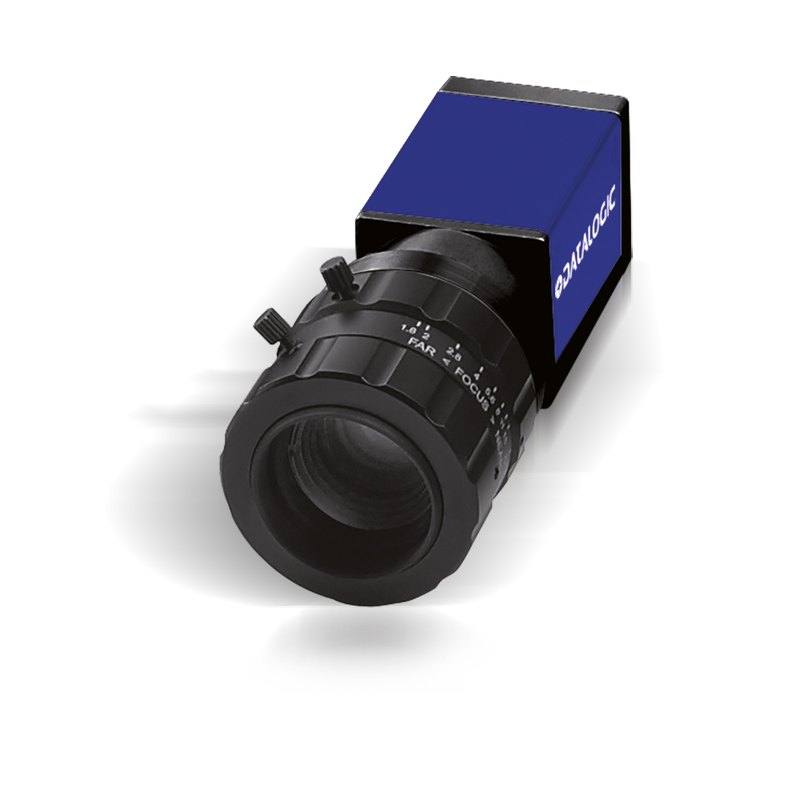
Datalogic / Datasensing CAM-M195-GE-2048x2048-25 (M195) machine vision camera
  • Rosepetal compatible
  • Recommended by AIS Vision

Datasensing CAM-M195-GE-2048x2048-25 (M195)

CAM-M195-GE-2048x2048-25

The Datasensing M195 (CAM-M195-GE-2048x2048-25, P/N 601-0456) is a compact GigE area-scan camera built around a 1" monochrome CMOS sensor delivering 2048x2048 (~4.2 MP) resolution at up to 25 frames per second with a global shutter and 5.5 µm pixels. It uses a single Gigabit Ethernet interface, can be powered over PoE or via 12 VDC, and provides trigger and strobe I/O for machine-vision integration. The camera has a C-mount lens interface, a compact 42 x 29 x 29 mm housing, IP30 protection, and operates from 0 to 50 °C.

Brand
Datalogic / Datasensing
Camera type
Area scan
Interface
GigE (Gigabit Ethernet)
Resolution
4.2 MP (2048 x 2048)
Horizontal resolution
2048 x 2048 px
Mono / color
Monochrome (grayscale)
Shutter
Global shutter
FPS
25 FPS
Mount
C-Mount
Sensor size
1" CMOS
Pixel size
5.5 µm
Power
PoE or 12 VDC

Technical overview

The Datalogic Datasensing M195 (CAM-M195-GE-2048x2048-25) is a compact area-scan camera built around a 1-inch monochrome CMOS sensor that delivers a square 2048 x 2048 frame, about 4.2 megapixels, at 5.5 um pixels. The square format is unusual and useful: with no wasted aspect ratio it suits round parts, web crops, and applications where you want equal resolution in both axes, and the relatively large 1-inch optical format keeps the per-pixel light collection generous, which helps signal-to-noise in the kind of demanding inspection this resolution implies. Being monochrome, every pixel contributes full luminance information rather than splitting it across a color filter array, so the M195 is geared toward edge-finding, contrast measurement, defect detection, and code reading rather than tasks that depend on hue.

The defining feature for motion is the global shutter. Every pixel is exposed simultaneously, so parts moving past the camera, or indexed on a fast handling system, are captured without the skew and smear that a rolling shutter would introduce. Combined with the 25 FPS frame rate, the camera is comfortable on conveyors and indexing stations where you trigger a single, geometrically faithful frame per part. The onboard trigger and strobe I/O is the key to that workflow: a hardware trigger from an encoder or photoeye starts the exposure, and the strobe output fires external lighting in sync so each capture is frozen under a controlled, repeatable illumination pulse. Because the sensor is monochrome and high in resolution, pairing it with the right geometry of LED lighting (bright-field, dark-field, dome, or backlight depending on the feature) does most of the work of making defects and marks pop.

Connectivity and integration are deliberately simple. A single Gigabit Ethernet interface carries the image stream under the GigE Vision / GenICam standard, which means the camera is plug-compatible with mainstream machine-vision software and supports cable runs up to roughly 100 m without repeaters, far beyond what USB allows. At 4.2 MP and 25 FPS the data comfortably fits inside the GigE bandwidth envelope, so this is a well-matched resolution-versus-throughput pairing for the interface. Power is flexible, over PoE on the same Ethernet cable for single-cable installs, or via 12 VDC where you already have local power. Optically it uses a standard C-mount, so lens selection is wide; just confirm the lens covers the 1-inch sensor and resolves the 5.5 um pixel pitch. The housing is small at 42 x 29 x 29 mm, making it easy to fit into tight fixtures and multi-camera arrays, though the IP30 rating and 0 to 50 C operating range mean it is intended for clean, climate-controlled enclosures rather than washdown or harsh-ambient placement.

Best for

  • Triggered conveyor and indexing-station inspection where the global shutter freezes moving parts without distortion at up to 25 FPS
  • High-resolution surface and defect inspection on packaging, electronics, and automotive parts that benefit from a full 4.2 MP monochrome frame
  • OCR/OCV and 2D-code reading on labels, date codes, and marked components where monochrome contrast and resolution matter more than color
  • Dimensional measurement and gauging on round or symmetric parts, where the square 2048 x 2048 format gives equal resolution in both axes
  • Single-cable PoE installs and multi-camera arrays in clean enclosures, using the compact 42 x 29 x 29 mm body to fit tight fixtures

Selection notes

  • Confirm your lens is rated for the 1-inch sensor format and can resolve the 5.5 um pixel pitch; a lens that under-covers or under-resolves will waste the 4.2 MP the sensor delivers.
  • Budget the lighting and trigger chain up front: use the strobe output to sync an external LED illuminator to each hardware-triggered exposure so moving parts are frozen under repeatable light.
  • This is a monochrome camera, so it cannot distinguish features by color; if your inspection depends on hue rather than contrast, this sensor is the wrong fit.
  • Plan the network for GigE Vision: a single Gigabit link supports long cable runs but the 4.2 MP stream wants a dedicated NIC or managed switch port; decide between PoE and 12 VDC based on whether you want a one-cable run.
  • The IP30 rating and 0 to 50 C range mean clean, temperature-controlled enclosures only; for washdown, dust, or harsh ambient you will need a protective housing.

Specifications: General
BrandDatalogic / Datasensing
Camera typeArea scan

Specifications: Sensor
Resolution4.2 MP (2048 x 2048)
Horizontal resolution2048 x 2048 px
Mono / colorMonochrome (grayscale)
ShutterGlobal shutter
Sensor size1" CMOS
Pixel size5.5 µm

Specifications: Performance
FPS25 FPS

Specifications: Interface
InterfaceGigE (Gigabit Ethernet)
ProtocolsGigE Vision / GenICam

Specifications: Optics
MountC-Mount

Specifications: Electrical
PowerPoE or 12 VDC

Specifications: Environment
IP ratingIP30
Operating temperature0 to 50 °C

Specifications: Mechanical
Dimensions42 x 29 x 29 mm

Frequently asked questions

Related technical guides

Rosepetal · AI

Test this camera with Rosepetal

Validate your visual inspection with AI: send us sample images and we evaluate the case on your hardware.

AIS Vision · Integration

We validate camera + lens + lighting

AIS Vision defines and tests the optimal combination of camera, optics and lighting for your application before you buy.