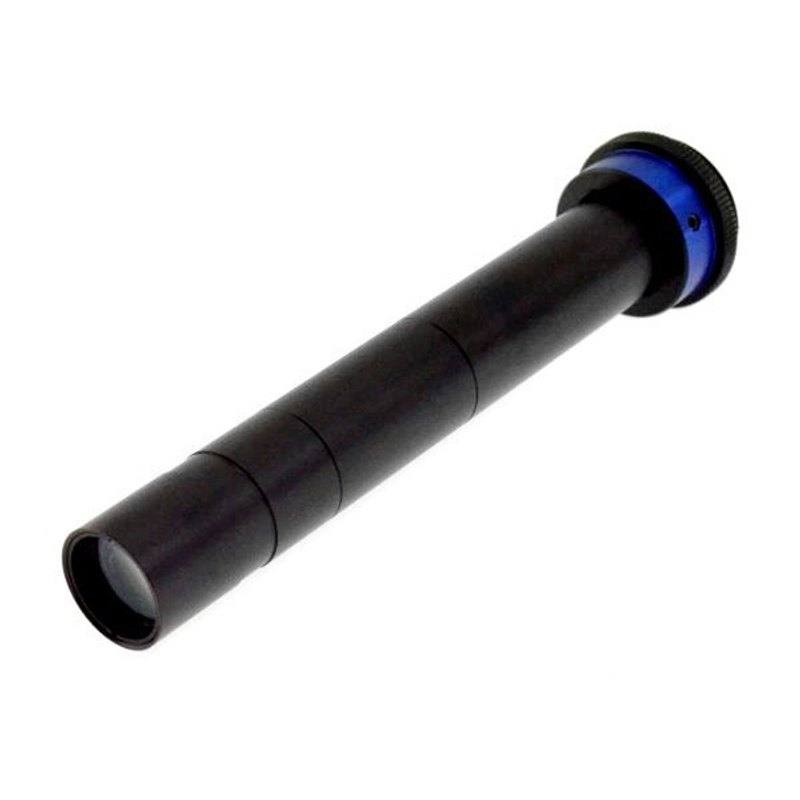
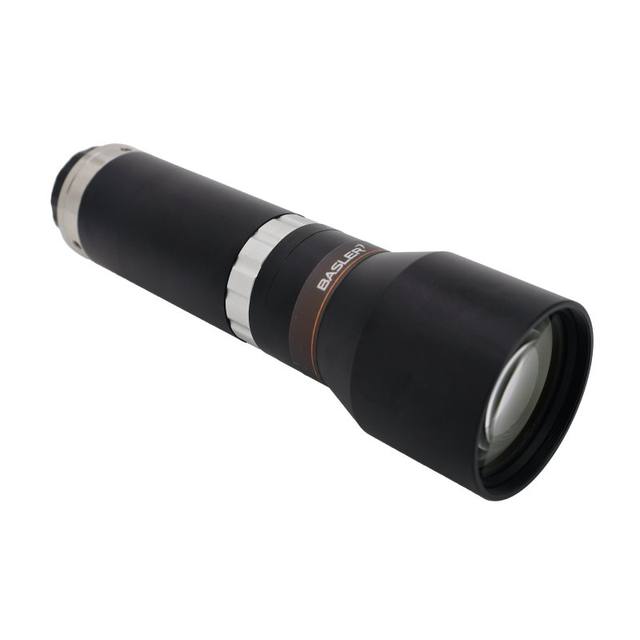
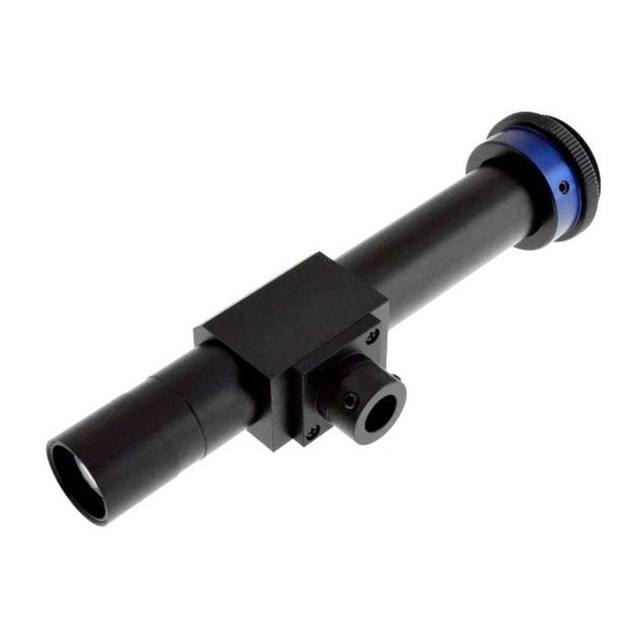
The Opto Engineering RT-HR-1M-110 is a 1.000× telecentric lens with a 110.0 mm working distance and a C-mount. It is listed in the TCHM series of high magnification telecentric lenses for sensors up to 2/3″, with an Ø 11.0 mm image circle and a working f-number of wF/# 16.7.
At 1.000× the sensor sees the object at actual size, so once the system is calibrated, feature dimensions on the sensor correspond directly to millimetres on the part. The telecentric design keeps magnification steady as the object moves slightly in depth, which makes the measured size less sensitive to part position. The working f-number of 16.7 sets the balance between depth of field and light reaching the sensor and should be considered alongside the exposure settings.
The 110.0 mm working distance gives clearance between the front of the lens and the part, which helps when the cell includes fixtures, guards or a standoff for the lighting. Lighting is a separate design decision for this lens: a backlight suits silhouette and edge measurement, while a directional light suits surface features, and the choice should follow the feature being measured.
Best for
Dimensional measurement of parts at 1.000× within a 2/3″ sensor frame
Silhouette and edge gauging with a separate backlight
Inspection cells that need a 110.0 mm working distance for fixtures, guards or lighting
Measurement tasks where magnification must stay steady across small changes in part depth
Selection notes
Use a C-mount camera with a sensor of 2/3″ or smaller so the sensor stays within the Ø 11.0 mm image circle.
Keep the part at the 110.0 mm working distance so the telecentric measurement is referenced to the designed distance, and reserve clearance for fixtures and lighting.
Choose the light for the feature being measured, since backlight and directional options suit different edges and surfaces.
Set exposure only after the light is final, because wF/# 16.7 links depth of field and light throughput.
Specifications: General
Brand
Opto Engineering
Specifications: Optical
Lens mount
C-mount
Image circle / max sensor
Ø 11.0 mm (max sensor 2/3″)
Magnification
1.000×
Working distance
110.0 mm
Telecentric
Yes
Applications this product is commonly selected for. Open one to see the full recommended hardware and approach.
Matched automatically by: camera mount fits the lens mount · camera sensor is covered by the lens image circle — this lens: C-mount · Ø 11.0 mm (max sensor 2/3″) image circle.