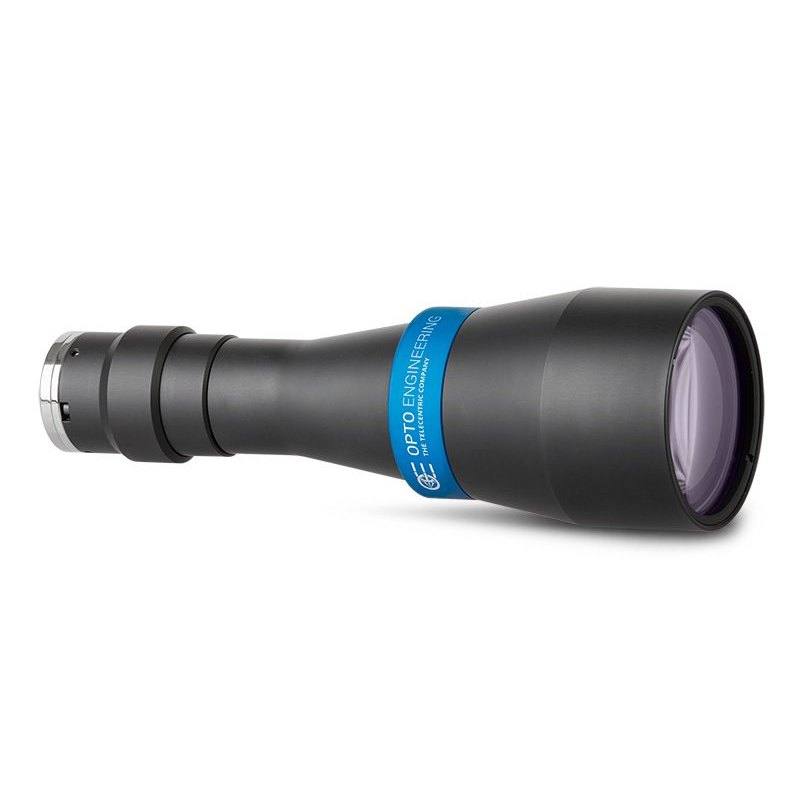
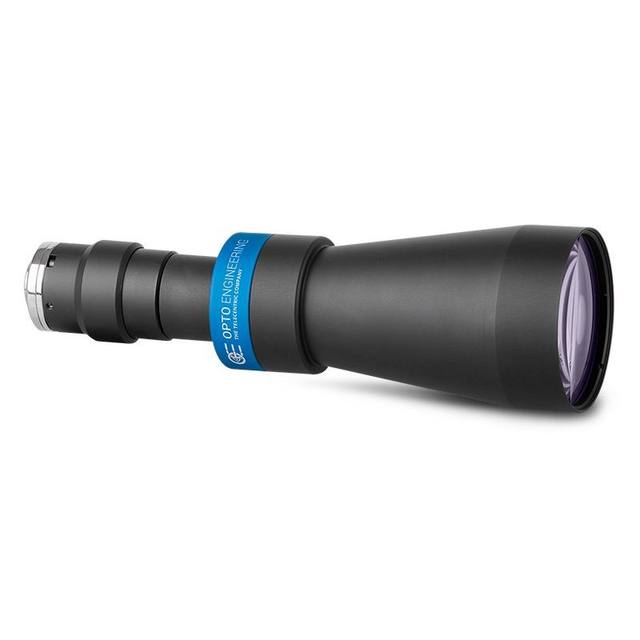
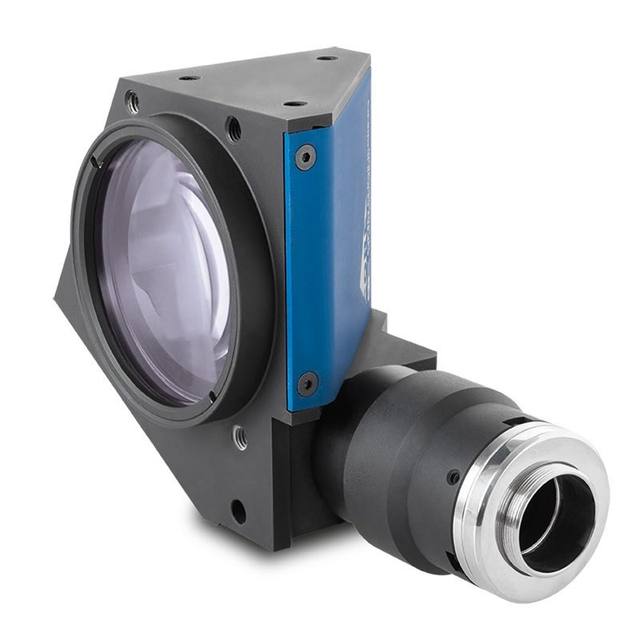
The TC2MHRP048-C is a high resolution telecentric lens with a C-mount for sensors up to 1″, delivering an image circle of Ø 16 mm (max sensor 1″). Its 0.267× magnification lets the sensor cover a wide field on the object, and the 132.9 mm working distance allows the camera to sit back from the part, leaving clearance around the work area.
Telecentricity is <0.08 (0.10) deg typ. (max) and distortion is <0.08 (0.10) % typ. (max). A telecentric design reduces perspective error, so the measured size of a feature depends on the object rather than on small changes in its distance to the lens. These typical values support consistent dimensional results when parts sit at slightly different heights, and the distortion figure indicates how faithfully positions are carried into the image.
The working f-number is wF/# 8, which admits more light than a higher f-number would and still gives usable depth of field for part-height variation. Use a camera with a C-mount and a 1″ or smaller sensor, and choose lighting to match the feature type: backlight for outlines and edges, or diffuse front light for surface detail.
Best for
Dimensional measurement of parts that need a wide 0.267× field of view.
Inspection setups where the camera stands back 132.9 mm from the object, leaving clearance around the work area.
Backlit silhouette measurement of part outlines.
Verification of features on parts with modest height variation.
Multi-feature presence checks inside one frame.
Selection notes
Check that the camera is C-mount and uses a sensor of 1″ or smaller to stay within the Ø 16 mm image circle.
Allow for the 132.9 mm working distance in the machine layout, including lens length and clearance around the lens body.
The wF/# 8 admits moderate light, so size the illumination for the exposure time your line speed demands.
Mount the lens rigidly, since stable geometry keeps the calibration of the telecentric measurement valid.
Specifications: General
Brand
Opto Engineering
Specifications: Optical
Lens mount
C-mount
Image circle / max sensor
Ø 16 mm (max sensor 1″)
Magnification
0.267×
Working distance
132.9 mm
Telecentric
Yes
Applications this product is commonly selected for. Open one to see the full recommended hardware and approach.
Matched automatically by: camera mount fits the lens mount · camera sensor is covered by the lens image circle — this lens: C-mount · Ø 16 mm (max sensor 1″) image circle.