Skip to content
Basler a2A3840-13gm machine vision camera
  • Rosepetal compatible
  • Recommended by AIS Vision

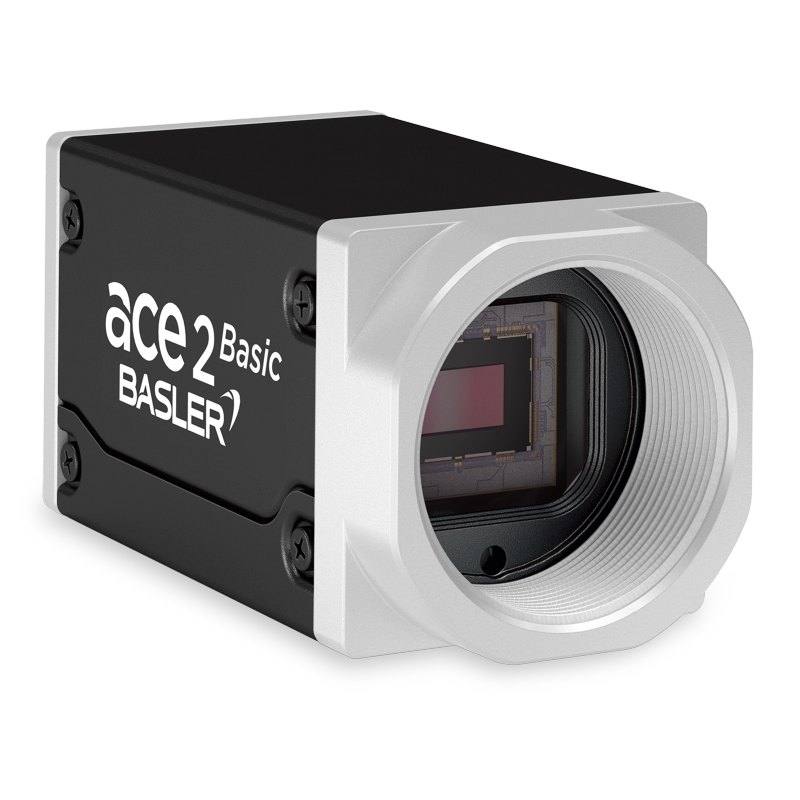
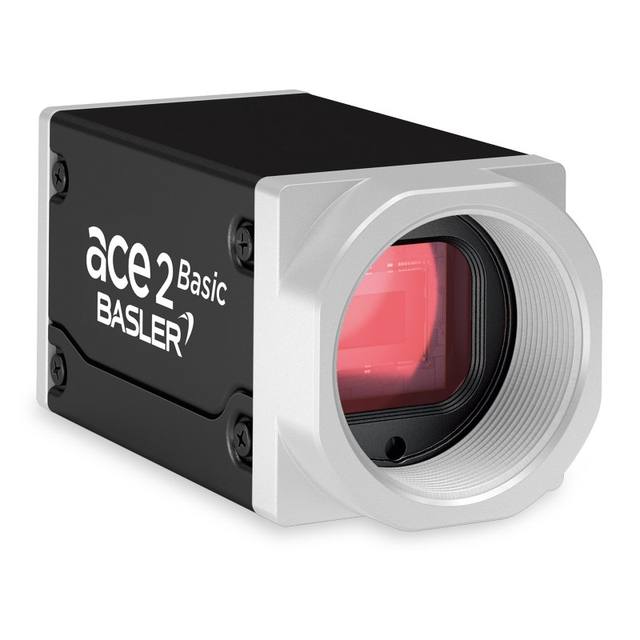
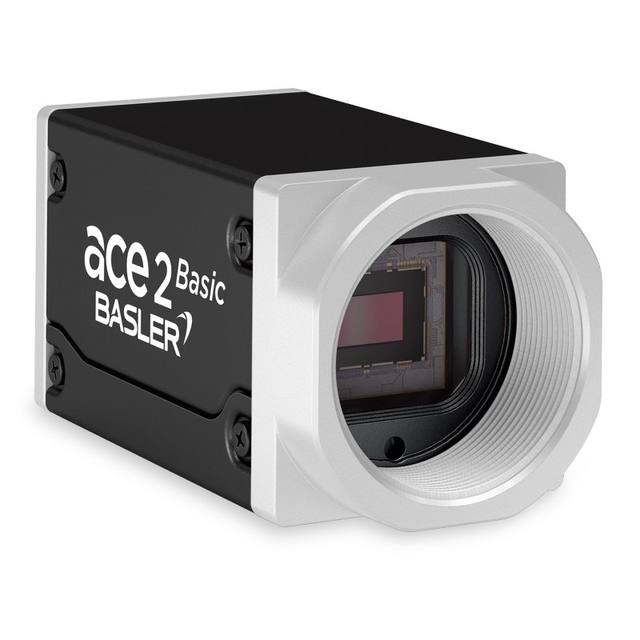
Basler ace 2 a2A3840-13gm (GigE, 8.3 MP Mono)

a2A3840-13gm

The Basler a2A3840-13gm is an ace 2 R series industrial area scan camera built around the 1/1.8" Sony IMX334 monochrome rolling-shutter CMOS sensor with 3840 x 2160 px (8.3 MP) resolution and 2.0 x 2.0 um pixels. It connects over Gigabit Ethernet (GigE) with an RJ45 connector, delivering roughly 13 fps at full resolution and supporting 8/10/12-bit pixel formats. The camera is GigE Vision 2.0 and GenICam compliant, uses a C-mount, and is powered via PoE (IEEE 802.3af) or 12-24 VDC through the M8 6-pin I/O connector. It offers 1 opto-coupled input plus 2 GPIO lines, weighs under 100 g, and carries an IP30 rating. The BAS (Basic) variant ships the standard Computer Vision feature set; a PRO variant adds Beyond features such as Pixel Beyond and Compression Beyond.

Brand
Basler
Camera type
Area scan
Interface
GigE (Gigabit Ethernet, RJ45, PoE)
Resolution
8.3 MP
Horizontal resolution
3840 x 2160 px
Mono / color
Monochrome
Sensor manufacturer
sony_starvis (display: Sony STARVIS (IMX334), BSI rolling shutter)
Sensor model
Sony IMX334LLR-C CMOS
Shutter
Rolling shutter
FPS
~13 fps at full resolution
Mount
C-mount
Sensor size
1/1.8" (7.7 x 4.3 mm, 8.86 mm diagonal)

Technical overview

The Basler ace 2 R a2A3840-13gm is a GigE area scan camera built around the 1/1.8-inch Sony IMX334 monochrome CMOS sensor, delivering 3840 x 2160 px (8.3 MP) at roughly 13 fps at full resolution. With 2.0 x 2.0 um pixels across a 7.7 x 4.3 mm active area, this is a high-resolution-per-format sensor: an installer gets enough pixels to resolve fine detail without jumping to a large, expensive optical format. The trade-off to understand up front is the shutter. This is a STARVIS BSI rolling-shutter sensor, so the IMX334 is at its best imaging static or slow-moving scenes, presentation-nest parts, and indexed conveyors that pause under the camera. Fast continuous motion can introduce skew because rolling shutter exposes the frame line by line, so for moving product you pair it with a freeze-motion strobe and a short exposure rather than relying on the shutter itself.

Connectivity is standard Gigabit Ethernet over an RJ45 connector, with the camera being GigE Vision 2.0 and GenICam compliant. That makes it a drop-in for most PC-based and embedded vision stacks: single Cat5e/Cat6 run carries both image data and, via PoE (IEEE 802.3af), power, so one cable reaches the camera up to the ~100 m GigE limit. Where PoE is not available the M8 6-pin I/O connector accepts 12-24 VDC. Power draw is a modest 2.5 W. The camera offers 8/10/12-bit pixel formats, so you can run 8-bit for throughput on simple presence/absence checks or step up to 10/12-bit when grayscale gradation matters for surface and contrast work. At ~13 fps the GigE bandwidth is comfortably matched to the 8.3 MP frame, which is the practical ceiling here; this is a resolution-led camera, not a high-speed one.

Mechanically it is a compact 55.5 x 29 x 29 mm box weighing under 100 g, with a C-mount for lens selection. Because the sensor is monochrome it captures only luminance, which gives the best sensitivity and sharpest per-pixel response for measurement, defect and code-reading tasks, and it pairs naturally with wavelength-specific illumination and optical filters to control contrast. The 2.0 um pixel is demanding on optics, so the C-mount lens must resolve at that pitch to extract the full 8.3 MP, generally a higher-resolution machine-vision lens rather than a basic fixed-focal. For triggering, the camera provides 1 opto-coupled input plus 2 GPIO lines through the M8 connector, enough to take an encoder or sensor trigger in and to fire a strobe controller out. The IP30 rating and -10 to 60 C operating range mean it is intended for clean, enclosed cabinets and machine frames rather than washdown or open factory-floor exposure, so plan an enclosure if the environment is wet or dusty.

Best for

  • High-resolution defect and surface inspection on stationary or indexed parts where 8.3 MP resolves fine flaws across the field of view
  • Dimensional measurement and gauging tasks that benefit from the dense 2.0 um pixel grid and monochrome per-pixel sharpness
  • Industrial OCR/OCV and printed-mark verification on labels, packaging and components
  • Traceability and code reading where high pixel count covers a wide field while keeping small codes legible
  • Packaging-line inspection in clean enclosed cells where a single PoE Cat6 cable simplifies cabling and the camera is triggered per part

Selection notes

  • Confirm the application is static or motion-stopped: the IMX334 is rolling shutter, so for moving product use a short exposure with a freeze-motion strobe fired from the camera GPIO, or choose a global-shutter model if continuous high-speed motion is unavoidable
  • Budget for optics that resolve 2.0 um pixels: a low-resolution C-mount lens will bottleneck the 8.3 MP sensor, so specify a high-resolution machine-vision lens matched to the 1/1.8-inch (8.86 mm diagonal) format
  • Plan the network and power path: GigE limits cable runs to about 100 m, and PoE requires an IEEE 802.3af source (switch or injector); otherwise wire 12-24 VDC into the M8 6-pin connector
  • Account for throughput: ~13 fps at full resolution is the ceiling, so for faster cycle rates consider ROI/binning to raise frame rate or select a faster interface and sensor
  • Check the environment against IP30 and -10 to 60 C: this is a cabinet/enclosure-grade camera, not rated for washdown or heavy dust, so add protective housing for harsh or hygienic lines
  • Decide on bit depth and variant early: 8/10/12-bit formats let you trade speed for grayscale depth, and the BAS (Basic) feature set covers standard Computer Vision while a PRO variant adds Beyond features such as Pixel Beyond and Compression Beyond

Specifications: General
BrandBasler
Camera typeArea scan

Specifications: Sensor
Resolution8.3 MP
Horizontal resolution3840 x 2160 px
Mono / colorMonochrome
Sensor manufacturersony_starvis (display: Sony STARVIS (IMX334), BSI rolling shutter)
Sensor modelSony IMX334LLR-C CMOS
ShutterRolling shutter
Sensor size1/1.8" (7.7 x 4.3 mm, 8.86 mm diagonal)
Pixel size2.0 x 2.0 um

Specifications: Performance
FPS~13 fps at full resolution

Specifications: Interface
InterfaceGigE (Gigabit Ethernet, RJ45, PoE)
ProtocolsGigE Vision 2.0, GenICam

Specifications: Optics
MountC-mount

Specifications: Electrical
PowerPoE (IEEE 802.3af) or 12-24 VDC
Power consumption2.5 W

Specifications: Environment
IP ratingIP30
Operating temperature-10 to 60 °C

Specifications: Mechanical
Housing materialBox
Dimensions55.5 x 29 x 29 mm
Weight100 g

Frequently asked questions

Related technical guides

Rosepetal · AI

Test this camera with Rosepetal

Validate your visual inspection with AI: send us sample images and we evaluate the case on your hardware.

AIS Vision · Integration

We validate camera + lens + lighting

AIS Vision defines and tests the optimal combination of camera, optics and lighting for your application before you buy.