Skip to content
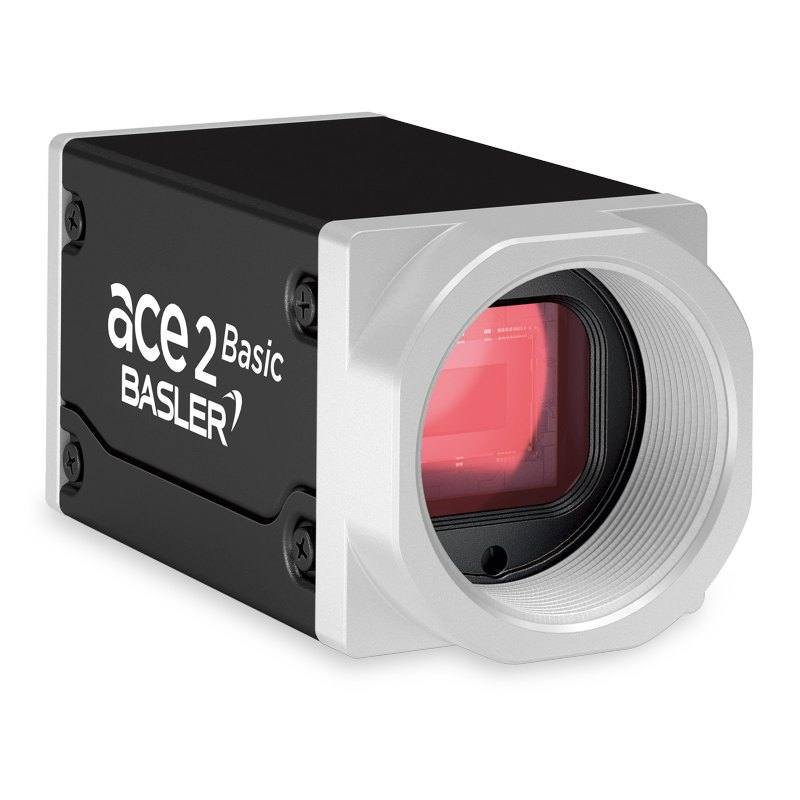
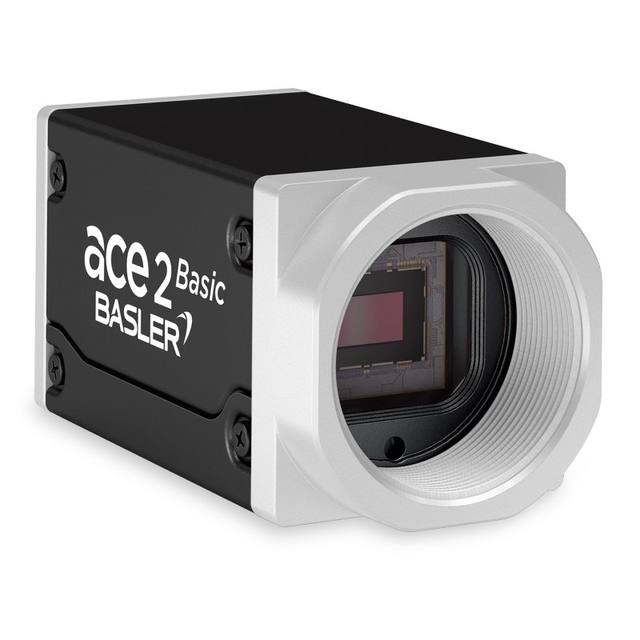
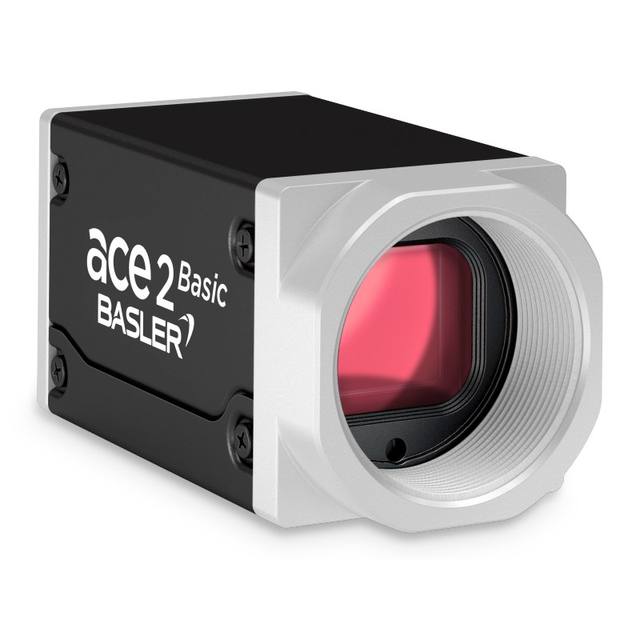
Basler a2A2048-37gc machine vision camera
  • Rosepetal compatible
  • Recommended by AIS Vision

Basler ace 2 a2A2048-37gc

a2A2048-37gc

The Basler a2A2048-37gc (model a2A2048-37gcBAS) is a 3.2 MP industrial area scan camera with a 2064 x 1552 pixel resolution on a 1/3.1" Sony IMX900 progressive-scan CMOS sensor featuring a global shutter and 2.25 µm pixels. It connects over Gigabit Ethernet (GigE Vision / GenICam) and reaches up to 37.2 fps at full resolution with optimized bandwidth settings. The color camera uses a C-mount, can be powered via PoE (IEEE 802.3af) or 12-24 VDC, and carries an IP30-rated box housing weighing under 100 g.

Brand
Basler
Camera type
Area scan
Interface
GigE (Gigabit Ethernet 1000 Mbit/s)
Resolution
3.2 MP
Horizontal resolution
2064 px
Mono / color
Color
Sensor manufacturer
Sony
Sensor model
Sony IMX900 (IMX900-AQR-C)
Shutter
Global shutter
FPS
up to 37.2 fps (32.6 fps default)
Mount
C-mount
Sensor size
1/3.1" (5.81 mm diagonal, 4.61 x 3.46 mm)

Technical overview

The Basler ace 2 a2A2048-37gc is a 3.2 MP color area scan camera built on the 1/3.1" Sony IMX900 progressive-scan CMOS sensor, delivering a 2064 x 1552 image through a true global shutter. The global shutter is the headline characteristic for an installer: every pixel is exposed simultaneously, so parts moving on a conveyor or indexing under the optics are captured without the skew and smear that a rolling shutter introduces. Paired with a frame rate of up to 37.2 fps at full resolution (32.6 fps in the default configuration), this makes the camera a sound choice for in-line inspection where the product never fully stops, and it removes the timing guesswork that otherwise forces you to gate motion to the sensor.

The sensor uses very small 2.25 x 2.25 µm pixels on a compact 5.81 mm diagonal (4.61 x 3.46 mm) optical format, which is what packs 3.2 MP into a 1/3.1" sensor. That density has direct optical consequences. To resolve detail at the pixel level you need a lens that out-resolves 2.25 µm pixels, so plan on a higher-grade C-mount lens corrected for a small format rather than an economy optic; the C-mount itself is standard and widely supported. The small pixel also means each photosite collects less light, so the camera rewards generous, controlled illumination. Because it is a color model with a Bayer pattern, it is the right pick when the inspection depends on hue (color-coded parts, print color verification, produce grading) and the wrong pick when you only need contrast, where a mono sensor would give more effective resolution and sensitivity for the same lens.

Connectivity and power are oriented toward simple, single-cable installs. The camera is GigE Vision / GenICam over Gigabit Ethernet (1000 Mbit/s), giving cable runs up to about 100 m on standard Ethernet without repeaters, which is far longer than USB3 reach and convenient for distributed cells. It can be powered over the same cable via PoE (IEEE 802.3af) or alternatively from 12-24 VDC, drawing only 3.7 W. The package is a lightweight box housing under 100 g (62.2 x 29 x 29 mm) rated IP30 and rated for -10 to 60 °C operation. IP30 means no liquid or fine-dust protection, so in washdown or dusty lines it must sit inside an enclosure. For triggered acquisition, pair it with a hardware trigger source (encoder or photoelectric sensor) and a strobed light synchronized to the global-shutter exposure so motion is frozen and lighting is repeatable shot to shot.

Best for

  • In-line defect and surface inspection of moving parts where the global shutter eliminates motion distortion at up to 37 fps
  • Color-dependent tasks such as print/label color verification, color-coded component checks, and food and beverage grading
  • Reading and verifying 1D/2D codes and printed text (OCR/OCV) for traceability on a conveyor
  • Distributed inspection cells needing long single-cable PoE runs over Gigabit Ethernet up to about 100 m
  • Compact, lightweight robot- or gantry-mounted vision where the sub-100 g box housing keeps payload low

Selection notes

  • The 2.25 µm pixels demand a high-resolution C-mount lens corrected for the small 1/3.1" (5.81 mm diagonal) format; an economy lens will be the limiting factor, not the sensor
  • Choose this color model only when hue matters; the Bayer filter trades effective resolution and light sensitivity versus a mono version, so prefer mono for pure contrast or measurement tasks
  • Small pixels collect less light, so budget for bright, controlled illumination and plan a strobed light synchronized to the global-shutter exposure for fast-moving lines
  • IP30 offers no dust or liquid ingress protection; specify a protective enclosure for washdown, oily, or dusty environments and stay within the -10 to 60 °C operating range
  • Confirm your network supports GigE Vision with a PoE (802.3af) switch or budget a 12-24 VDC supply; at 3.7 W the camera is easy to power either way, but reaching 37.2 fps requires the optimized-bandwidth setup rather than the 32.6 fps default

Specifications: General
BrandBasler
Camera typeArea scan

Specifications: Sensor
Resolution3.2 MP
Horizontal resolution2064 px
Mono / colorColor
Sensor manufacturerSony
Sensor modelSony IMX900 (IMX900-AQR-C)
ShutterGlobal shutter
Sensor size1/3.1" (5.81 mm diagonal, 4.61 x 3.46 mm)
Pixel size2.25 x 2.25 µm

Specifications: Performance
FPSup to 37.2 fps (32.6 fps default)

Specifications: Interface
InterfaceGigE (Gigabit Ethernet 1000 Mbit/s)
ProtocolsGigE Vision, GenICam

Specifications: Optics
MountC-mount

Specifications: Electrical
PowerPoE (IEEE 802.3af) or 12-24 VDC
Power consumption3.7 W

Specifications: Environment
IP ratingIP30
Operating temperature-10 to 60 °C

Specifications: Mechanical
Housing materialBox
Dimensions62.2 x 29 x 29 (with lens mount and connectors) mm
Weight100 g

Frequently asked questions

Related technical guides

Rosepetal · AI

Test this camera with Rosepetal

Validate your visual inspection with AI: send us sample images and we evaluate the case on your hardware.

AIS Vision · Integration

We validate camera + lens + lighting

AIS Vision defines and tests the optimal combination of camera, optics and lighting for your application before you buy.