Skip to content
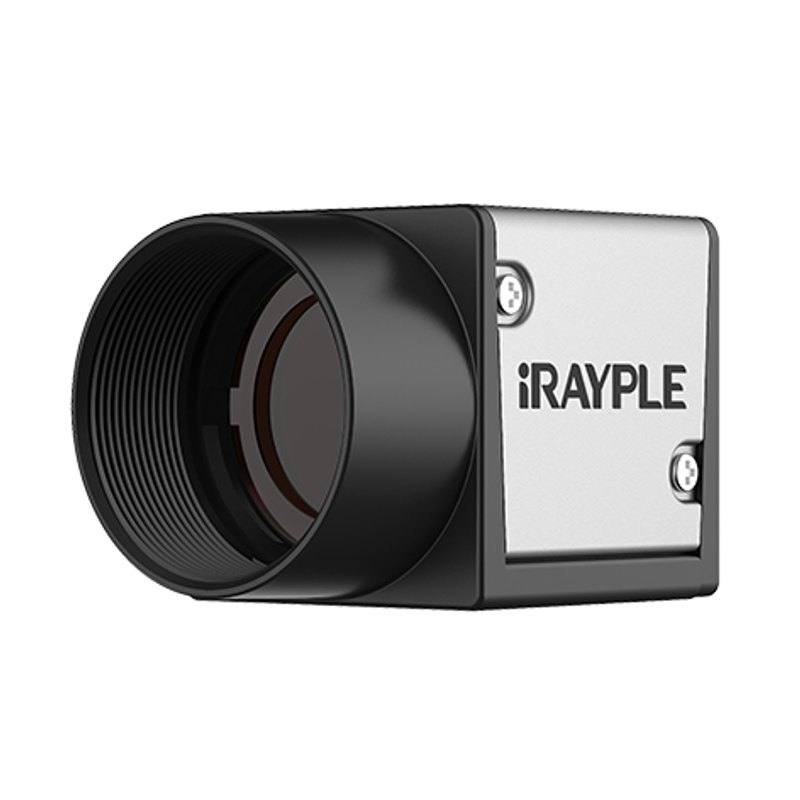
iRAYPLE A7300CU90E (2048x1536, 120fps, IMX252, USB3.0) machine vision camera
  • Rosepetal compatible
  • Recommended by AIS Vision

iRAYPLE A7300CU90E

A7300CU90E

The iRAYPLE A7300CU90E is a 3-megapixel area-scan camera built on Sony's 1/1.8-inch IMX252 Pregius global-shutter CMOS sensor (3.45 um pixels), delivering 2048x1536 resolution at up to 120 fps over a USB3.0 (USB3 Vision / GenICam) interface. It offers a 70 dB dynamic range, 38 dB SNR, exposure from 20 us to 1 s and 1x-32x gain, with BayerRG/GB output at 8/10-bit. The camera uses a C-mount, optically isolated GPIO via a Hirose 6-pin connector, and can be powered over USB or 9-24 VDC. The compact 29x29x29 mm, 60 g housing operates from -30 to 50 C.

Brand
iRAYPLE
Camera type
Area scan
Interface
USB3.0 (USB3 Vision)
Resolution
3 MP (2048 x 1536)
Horizontal resolution
2048 x 1536 px
Mono / color
Color
Sensor manufacturer
Sony Pregius
Sensor model
Sony IMX252 CMOS
Shutter
Global shutter
FPS
120 fps
Mount
C-mount
Sensor size
1/1.8 inch

Technical overview

The A7300CU90E pairs Sony's 1/1.8-inch IMX252 Pregius global-shutter CMOS with a USB3.0 (USB3 Vision / GenICam) link, so the whole 2048 x 1536, 3-megapixel frame is exposed simultaneously and read out at up to 120 fps. That global shutter is the headline trait for an installer: anything moving past the camera (parts on a conveyor, a rotating drum, a pick-and-place arm) is captured without the slanting or smearing that a rolling-shutter sensor would introduce, and the high 120 fps ceiling means you can either inspect at line rate or grab multiple frames of the same part for averaging or multi-angle checks. The 3.45 um pixels and 70 dB dynamic range with 38 dB SNR give clean, well-separated tonal steps, which matters when you are trying to resolve low-contrast surface defects or read marginal print.

Because it is a color sensor with BayerRG/GB output at 8 or 10-bit, this camera earns its place wherever the decision depends on hue, not just brightness, such as verifying wire-harness color codes, label and packaging color, LED bin color, or distinguishing materials that look identical in monochrome. The trade-off to plan for is the Bayer mask: effective spatial detail is below the nominal 3 MP because color is interpolated, so for the finest dimensional or OCR work a monochrome sibling would resolve more. Exposure is adjustable from 20 us to 1 s with 1x-32x gain, giving you the latitude to freeze fast motion with a short exposure and bright strobe at one extreme, or integrate light in a dim enclosure at the other.

Mechanically and electrically the camera is built to drop into a tight cell. It is a 29 x 29 x 29 mm, 60 g C-mount block drawing about 3.91 W, powered either over the USB3 bus or from an external 9-24 VDC supply, with optically isolated GPIO broken out on a Hirose 6-pin connector for hardware trigger-in and strobe/flash-out. The optical isolation is what lets you wire it cleanly to a PLC, encoder, or photoeye for triggered acquisition without ground-loop noise. The C-mount and 1/1.8-inch format set your lens selection: choose a C-mount lens rated for at least a 1/1.8-inch sensor and matched to the 3.45 um pixel pitch so the optics actually resolve the sensor. A wide operating range of -30 to 50 C lets it sit in cold-store, outdoor, or hot-line environments where a standard office-grade camera would not.

Best for

  • High-speed color inspection on moving lines where the global shutter prevents motion distortion, e.g. parts streaming past on a conveyor at up to 120 fps
  • Color-dependent verification such as wire-harness/connector color codes, label and packaging color, or LED bin sorting that a monochrome camera cannot judge
  • Surface and cosmetic defect detection on electronics, battery, and automotive components where the 70 dB dynamic range and clean SNR separate subtle flaws
  • Triggered acquisition synchronized to a PLC, encoder, or photoeye via the optically isolated Hirose GPIO for one-frame-per-part inspection
  • Compact, embedded vision cells and robot-guidance setups where the 29 mm cube, 60 g weight, and bus-powered USB3 connection simplify integration

Selection notes

  • This is a Bayer color sensor: effective resolved detail is below the nominal 3 MP because color is interpolated. For the finest dimensional gauging or OCR, evaluate a monochrome variant of the same IMX252 platform.
  • USB3.0 keeps cabling and cost low but caps practical cable length at a few meters; for runs beyond that or for multi-camera fan-out, a GigE or CoaxPress camera may suit the layout better.
  • Verify your lens covers the 1/1.8-inch format and resolves the 3.45 um pixel pitch on a C-mount; an undersized or low-resolution lens will throttle the sensor's true detail.
  • Sustained 120 fps demands the full USB3 bus budget and host throughput; confirm the controller/host can absorb the data rate, and budget the ~3.91 W and any heat sinking inside enclosed cells.
  • Plan the GPIO wiring early: the optically isolated 6-pin Hirose provides trigger-in and strobe-out, and external power can come over USB or 9-24 VDC, which affects whether you run one cable or two to the camera.

Specifications: General
BrandiRAYPLE
Camera typeArea scan

Specifications: Sensor
Resolution3 MP (2048 x 1536)
Horizontal resolution2048 x 1536 px
Mono / colorColor
Sensor manufacturerSony Pregius
Sensor modelSony IMX252 CMOS
ShutterGlobal shutter
Sensor size1/1.8 inch
Pixel size3.45 x 3.45 um

Specifications: Performance
FPS120 fps

Specifications: Interface
InterfaceUSB3.0 (USB3 Vision)
ProtocolsUSB3 Vision, GenICam

Specifications: Optics
MountC-mount

Specifications: Electrical
PowerUSB or 9-24 VDC
Power consumption3.91 W
Supply voltage9 ~ 24 VDC

Specifications: Environment
Operating temperature-30 ~ 50 C

Specifications: Mechanical
Dimensions29 x 29 x 29 mm
Weight60 g

Frequently asked questions

Related technical guides

Rosepetal · AI

Test this camera with Rosepetal

Validate your visual inspection with AI: send us sample images and we evaluate the case on your hardware.

AIS Vision · Integration

We validate camera + lens + lighting

AIS Vision defines and tests the optimal combination of camera, optics and lighting for your application before you buy.