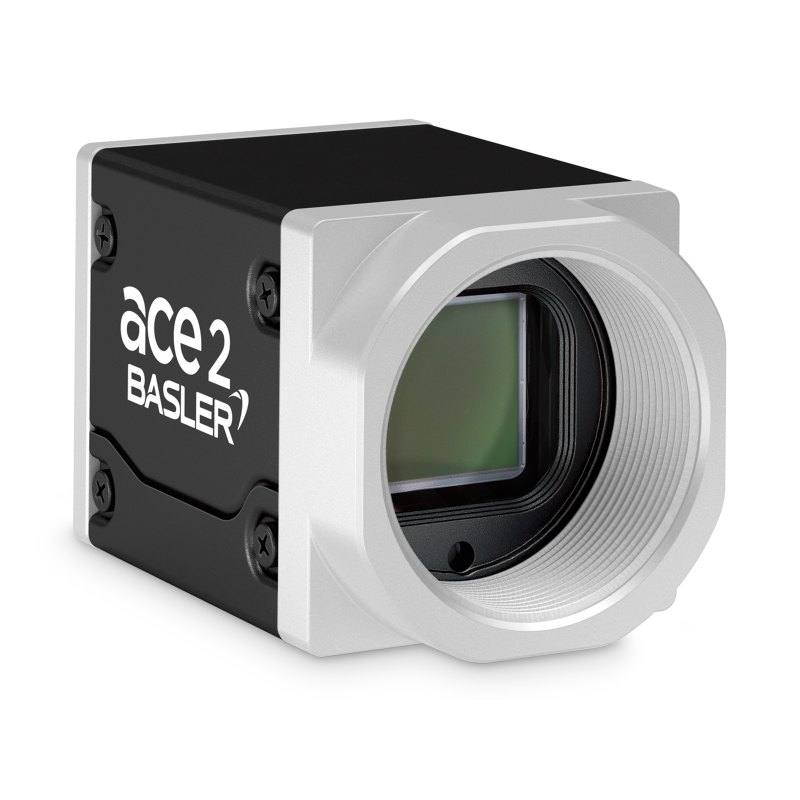
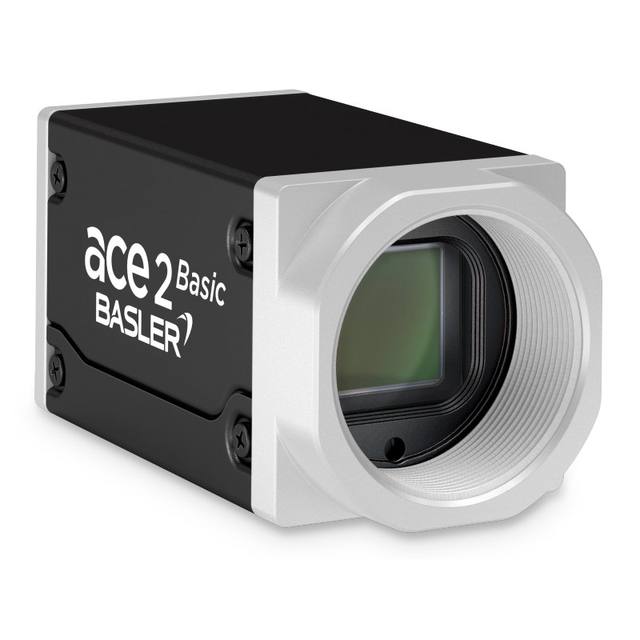
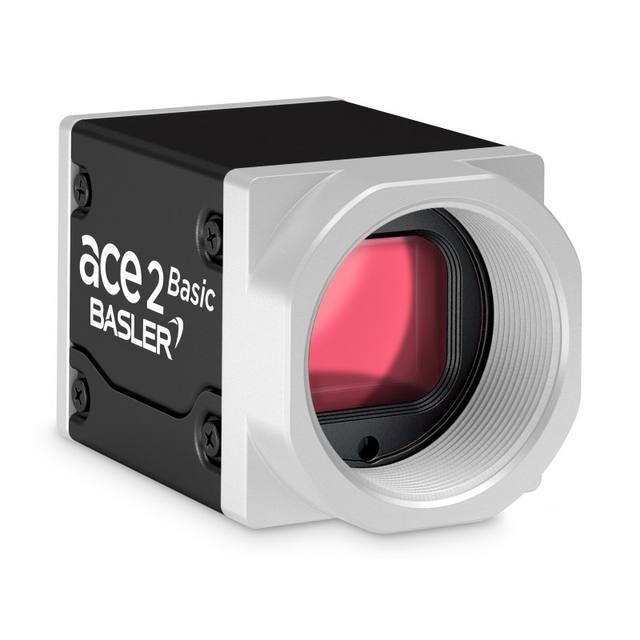
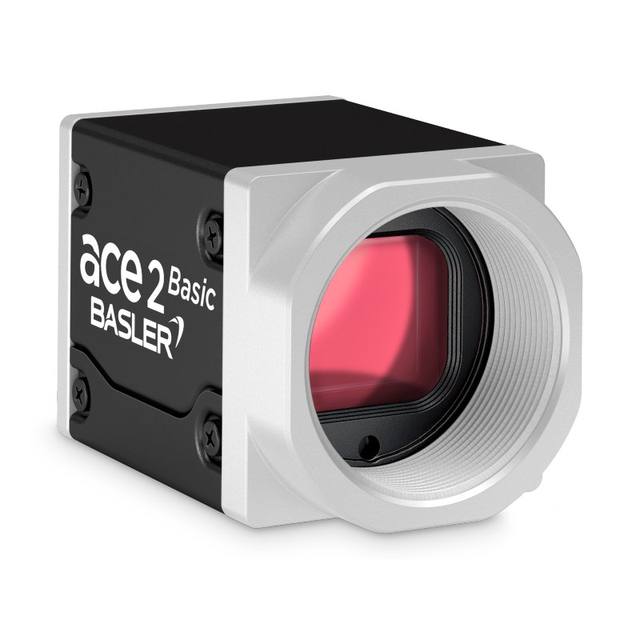
The Basler a2A4096-67cm is part of the ace 2 V product line, featuring a Sony IMX545-AAMJ-C progressive scan CMOS sensor with a native resolution of 4128 x 3008 pixels (12.3 MP) and 2.74 µm pixel pitch. It communicates over CoaXPress 2.0 with CXP-12 link speed (up to 12.5 Gbps) and is powered via Power over CoaXPress (PoCXP) at 24 VDC. The camera achieves up to 67.7 fps at 8-bit depth, fits a compact 29 x 29 mm cross-section housing with C-mount, weighs approximately 76 g, and offers an IP30 protection rating. EMVA-measured image quality metrics include 70.1 dB dynamic range, 65% quantum efficiency, and 39.92 dB SNR.
Brand
Basler
Camera type
Area Scan
Interface
CoaXPress CXP-12 (2.5–12.5 Gbps)
Resolution
12.3 MP
Horizontal resolution
4096 (nominal, per product name and shop page); full sensor is 4128×3008
The Basler a2A4096-67cm is built around Sony's IMX545-AAMJ-C Pregius S global shutter progressive scan CMOS, delivering a native 4128 x 3008 pixel array (12.3 MP) with a 2.74 µm pixel pitch on a 1/1.1-inch optical format. Global shutter architecture means every pixel integrates light simultaneously, so fast-moving parts — conveyor belts, spinning components, pick-and-place heads — are captured without the geometric distortion that rolling shutter designs introduce. The 70.1 dB dynamic range and 39.92 dB SNR, both EMVA-measured, translate to reliable grey-level separation between surface features even when ambient reflectivity varies across a scene, while 65% quantum efficiency gives good signal at modest illumination levels, reducing the strobe energy budget. At 8-bit output the camera achieves 67.7 fps full-frame, which means a 100 mm field of view at full resolution produces roughly 24 µm of motion blur per millisecond of exposure — a useful reference when sizing strobe duration against line speed.
The camera communicates over CoaXPress 2.0 at CXP-12 link speed, supporting bandwidth up to 12.5 Gbps over a single 75-Ω coaxial cable that simultaneously carries GenICam control traffic, trigger signals, and Power over CoaXPress (PoCXP) at 24 VDC. For an installer this collapses three separate wiring runs (power, data, trigger) into one rugged coax, simplifies cable routing into enclosures, and supports longer cable runs than USB 3 without active extenders. The CXP-12 bandwidth is well matched to the sensor: at 4128 × 3008 pixels and 67.7 fps, uncompressed 8-bit throughput is approximately 838 MB/s, sitting comfortably within the link budget. A compatible CXP-12 frame grabber is required; this also places the image pre-processing burden on the host PC rather than the camera, keeping integration straightforward with standard GenICam / Pylon SDK workflows.
The housing measures 29 × 29 mm in cross-section and weighs 76 g, making it easy to mount in tight multi-camera arrays or on collaborative robot wrists without significant payload concerns. The C-mount lens interface is widely supported by the high-resolution lens portfolio needed to cover the 1/1.1-inch sensor circle without vignetting; installers should select lenses with an image circle rated for at least 1/1.1-inch to avoid corner fall-off at 12.3 MP. Operating temperature range of -10 to +50 °C suits most factory floors, while the IP30 rating covers incidental finger contact with enclosure openings — a sealed housing or protective barrier should be used in environments with coolant mist, dust, or wash-down cycles. Power consumption of 3.3 W at 24 VDC means the PoCXP budget of a standard CXP-12 frame grabber port is sufficient without supplemental power cabling.
Best for
High-resolution surface-defect inspection on flat panels, PCBs, or battery electrode sheets where 12.3 MP coverage reduces the number of camera stations needed to reach sub-pixel defect detectability across a wide field.
Precision dimensional measurement of machined or stamped components where global shutter eliminates motion-induced shape distortion and the 70.1 dB dynamic range preserves edge contrast against reflective metal surfaces.
Semiconductor and electronics traceability — reading fine 2D Data Matrix codes or performing OCR on component markings — where the high pixel count and 2.74 µm pitch give sufficient character resolution without requiring extreme macro optics.
Robot guidance and bin-picking applications that benefit from high frame rate (up to 67.7 fps) with distortion-free global shutter capture, allowing accurate pose estimation of moving or vibrating parts at the end of a robot arm.
Pharmaceutical and packaging inspection lines where a single wide-field camera must simultaneously verify label text, print quality, and fill-level features, leveraging the high spatial resolution to avoid multiple camera stations.
Selection notes
A CXP-12-capable frame grabber is mandatory — this camera does not support GigE, USB 3, or Camera Link. Verify that your frame grabber vendor supplies a certified Basler Pylon or GenICam driver for your OS before committing to the platform.
Lens selection must cover the 1/1.1-inch (11.22 × 8.22 mm) sensor format. Many C-mount lenses marketed for 1-inch formats fall short of covering the full 1/1.1-inch diagonal at full aperture; check the manufacturer's image circle specification at the intended f-stop, not only at the centre.
The 2.74 µm pixel pitch sets a demanding resolution requirement on optics: to avoid the lens being the limiting factor at 12.3 MP, the chosen lens should resolve at least 182 lp/mm at the sensor plane (Nyquist limit). Confirm MTF data at the working aperture, particularly toward the corners of the 1/1.1-inch field.
IP30 means the camera body resists solid objects larger than 2.5 mm but offers no liquid ingress protection. In environments with cutting fluid, coolant, or cleaning spray, a sealed protective housing is required to maintain reliable operation.
At 67.7 fps full resolution and CXP-12, the frame grabber's on-board memory and DMA throughput must sustain approximately 838 MB/s. Confirm that the host PC's PCIe slot bandwidth and CPU/memory architecture can sustain this rate before assuming real-time acquisition at maximum speed.
Specifications: General
Brand
Basler
Camera type
Area Scan
Specifications: Sensor
Resolution
12.3 MP
Horizontal resolution
4096 (nominal, per product name and shop page); full sensor is 4128×3008
Mono / color
Monochrome
Sensor manufacturer
Sony Pregius S
Sensor model
Sony IMX545-AAMJ-C
Shutter
Global Shutter
Sensor size
1/1.1 inch
Pixel size
2.74 x 2.74 µm
Specifications: Performance
FPS
67.7 fps (8-bit); 54.4 fps (default)
Specifications: Interface
Interface
CoaXPress CXP-12 (2.5–12.5 Gbps)
Protocols
GenICam, CoaXPress 2.0
Specifications: Optics
Mount
C-mount
Specifications: Electrical
Power
Power over CoaXPress (PoCXP) 24 VDC
Power consumption
3.3 W
Specifications: Environment
IP rating
IP30
Operating temperature
-10 to 50 °C
Specifications: Mechanical
Dimensions
11.22 x 8.22 mm
Weight
76 g
Applications this camera is commonly selected for. Open one to see the full recommended hardware and approach.
Get a first image quickly with the pylon Viewer, then move into the pylon SDK for your application. These cameras are GenICam/GenTL-compliant, so any compliant vision software can drive them as well.
Download and install the pylon Camera Software Suite for your OS from Basler. This provides the pylon Viewer, the GenTL transport-layer producers and the pylon SDK (C/C++/.NET/Python). On Windows the installer adds the needed drivers; on Linux follow the included setup notes for USB and network permissions.
2. Connect the camera and check the link
Cable the camera to its matching interface: GigE Vision to a GigE port (use a quality cable and, ideally, a dedicated NIC with jumbo frames enabled), USB3 Vision to a USB 3.x port with the supplied cable, or CoaXPress to the frame grabber. Provide power where required (PoE, USB bus power, or PoCXP). Open the pylon Viewer and confirm the camera appears in the device list; for GigE, make sure the camera and NIC are on the same subnet.
3. Grab a first image and set exposure, gain and pixel format
Select the camera in the pylon Viewer and start a continuous grab. Adjust exposure time and gain until the image is well exposed (avoid clipped highlights), set the pixel format (e.g. Mono8 or a Bayer/RGB format), and focus the lens. Use a test pattern if the lens or scene is not ready yet.
4. Configure triggering and acquisition
Decide between free-run and triggered acquisition. For synchronized capture, set the trigger source (software or a hardware line on the I/O connector), trigger mode and any debounce or exposure mode, then verify timing. Note the parameter names you change in the Viewer feature tree, as you will reuse them in code.
5. Move to the SDK or a GenICam-compliant library
Recreate your settings in code with the pylon SDK (C, C++, .NET or Python) to open the device, apply the same features and pull frames into your pipeline; pylon vTools and pylon AI can add processing blocks. Because the cameras are GenICam/GenTL standard, third-party vision libraries work too. Once the image stream is stable, you can route frames to a deep-learning inspection such as Rosepetal for automated defect detection.
Frequently asked questions
The a2A4096-67cm uses CoaXPress 2.0 at CXP-12 link speed exclusively. It requires a frame grabber with at least one CXP-12 port. Power over CoaXPress (PoCXP) at 24 VDC is delivered through the same coax cable, so no separate power supply is needed at the camera end provided the frame grabber port supports PoCXP.
Global shutter eliminates the geometric distortion (shear, wobble) that rolling shutter causes on moving subjects, because all pixels integrate simultaneously. However, motion blur from the exposure duration itself still applies. At 67.7 fps the minimum programmable exposure is well below 1 ms; pairing with a short-duration strobe illuminator is the standard way to freeze motion entirely.
At 8-bit depth the camera achieves up to 67.7 fps full frame. The default operating point listed in the specs is 54.4 fps, which corresponds to a standard configuration before optimising transport layer settings. Higher bit depths reduce the achievable frame rate because more data must be transferred per frame over the fixed CXP-12 bandwidth.
The camera uses a standard C-mount. The active sensor area is 11.22 × 8.22 mm, corresponding to a 1/1.1-inch optical format. The lens image circle must cover at least the full diagonal of this sensor (approximately 13.9 mm) at the intended working aperture to avoid vignetting in the corners.
The camera is rated IP30, which provides protection against solid objects larger than 2.5 mm but no protection against dust or liquids. For dusty, wet, or wash-down environments a separate sealed enclosure is necessary. The operating temperature range is -10 to +50 °C.