Omron / Sentech Sentech STC-SBS123BCXP62 / STC-SCS123BCXP62 12MP CoaXPress Camera
STC-SBS123BCXP62
The STC-SBS123BCXP62 (mono) and STC-SCS123BCXP62 (color) are compact 40×40 mm area scan cameras built around Sony's IMX253 1.1-inch global shutter CMOS sensor at 4096×3000 pixels with 3.45 µm pixel pitch. Both deliver up to 67 fps in 8-bit mode via a 2-lane CXP-6 CoaXPress connection compliant with CoaXPress Standard v1.1.1, powered by PoCXP or external 18.5–26 V DC. Monochrome output formats are Mono8/Mono10/Mono12; the color variant outputs BayerRG8/BayerRG10/BayerRG12. Advanced on-camera features include ROI, binning, decimation, flat-field correction, defective-pixel correction (up to 1280 pixels), and storage for up to 8 user profiles.
Brand
Omron / Sentech
Camera type
Area Scan
Interface
CoaXPress CXP-6 (2-lane), v1.1.1
Resolution
12 MP
Horizontal resolution
4096 × 3000 px
Mono / color
Mono (STC-SBS123BCXP62) / Color (STC-SCS123BCXP62)
The STC-SBS123BCXP62 (monochrome) and STC-SCS123BCXP62 (color) are built around Sony's IMX253, a 1.1-inch global-shutter CMOS from the Pregius series. The full 4096 × 3000 pixel array delivers 12 megapixels with a 3.45 µm pixel pitch — small enough to support high spatial-frequency detail while remaining compatible with high-quality C-mount optics designed for the 1.1-inch image circle. Global shutter means every pixel integrates simultaneously, eliminating the motion artifacts that rolling-shutter cameras introduce on moving parts, vibrating conveyors, or under stroboscopic lighting. At up to 67 fps in 8-bit mode the camera can keep pace with moderate-to-fast production lines without sacrificing full resolution, and on-camera ROI lets installers trade field of view for additional frame rate headroom when the application only requires a sub-region of interest.
The 2-lane CXP-6 CoaXPress interface (CoaXPress Standard v1.1.1) drives the bandwidth needed to sustain 67 fps at 12 MP over a single coaxial cable — the same cable that carries power via PoCXP, eliminating a separate supply run to the camera head. Where rack power is preferred, the camera also accepts 18.5–26 V DC externally. The camera's 40 × 40 × 45.5 mm body and 120 g mass make it straightforward to mount in tight machine envelopes or on robot flanges where payload and geometry matter. Power draw is 4.7 W, low enough that a multi-camera frame grabber can power several heads simultaneously via PoCXP without oversizing the supply. GenICam compliance means the camera enumerates immediately in standard vision frameworks, and support for up to 8 stored user profiles simplifies recipe management on lines that run multiple part types.
For integration planning: the monochrome STC-SBS123BCXP62 outputs Mono8, Mono10, or Mono12 pixel formats, allowing the integrator to trade bit depth against bandwidth budget; the color STC-SCS123BCXP62 outputs BayerRG8, BayerRG10, or BayerRG12 for on-host debayering. On-camera flat-field correction compensates for lens shading and illumination non-uniformity, reducing the preprocessing burden in the host application. Defective-pixel correction handles up to 1280 pixels, maintaining image integrity over the sensor lifetime. Binning and decimation modes allow lower-resolution outputs when full 12 MP fidelity is not required, trading spatial resolution for frame rate or reduced data volume. Operating temperature is 0–45 °C, suited to conditioned factory environments; for harsher thermal or ingress conditions a housing should be budgeted.
Best for
High-resolution surface defect inspection on flat or curved parts — electronics PCBs, semiconductor wafers, battery cell faces — where 12 MP resolves fine scratches, pits, or coating defects across a wide field in a single shot
Dimensional measurement and gauging of precision components in automotive and electronics manufacturing, where global shutter eliminates motion blur on moving parts and the 3.45 µm pixel pitch enables sub-pixel edge interpolation
Packaging and label inspection requiring simultaneous reading of 1D/2D codes, OCR verification, and print-quality checking in a single camera station, exploiting the full resolution to cover large label areas without sacrificing character legibility
Robot-guided pick-and-place or assembly alignment, where the compact 40 × 40 mm body fits on a robot wrist and the global shutter captures a sharp image at the moment the arm pauses or slows, with PoCXP simplifying cable management to the end-effector
Multi-format pharmaceutical or medical-device line inspection — blister packs, vials, labels — where the color variant distinguishes tablet color or cap color for presence/correctness checks alongside dimensional verification
Selection notes
Lens image circle must cover the 1.1-inch sensor format; using a lens rated only for 2/3-inch or 1-inch formats will produce corner vignetting and resolution fall-off at 12 MP — verify the lens datasheet explicitly lists 1.1-inch or larger coverage
CXP-6 requires a compatible 2-lane CoaXPress frame grabber; confirm the grabber supports CXP-6 link speed and that the host PCIe slot has sufficient bandwidth for sustained 12 MP at 67 fps before finalising the system BOM
PoCXP simplifies cabling to a single coax run, but the frame grabber's PoCXP power budget per port must exceed 4.7 W with margin; if using external DC power instead, ensure the supply is regulated within 18.5–26 V DC and rated for inrush current at camera startup
The operating temperature ceiling of 45 °C means the camera requires adequate airflow in enclosures with heat-generating components nearby; model the thermal budget including lens heating and frame grabber radiated heat before sign-off on a sealed enclosure design
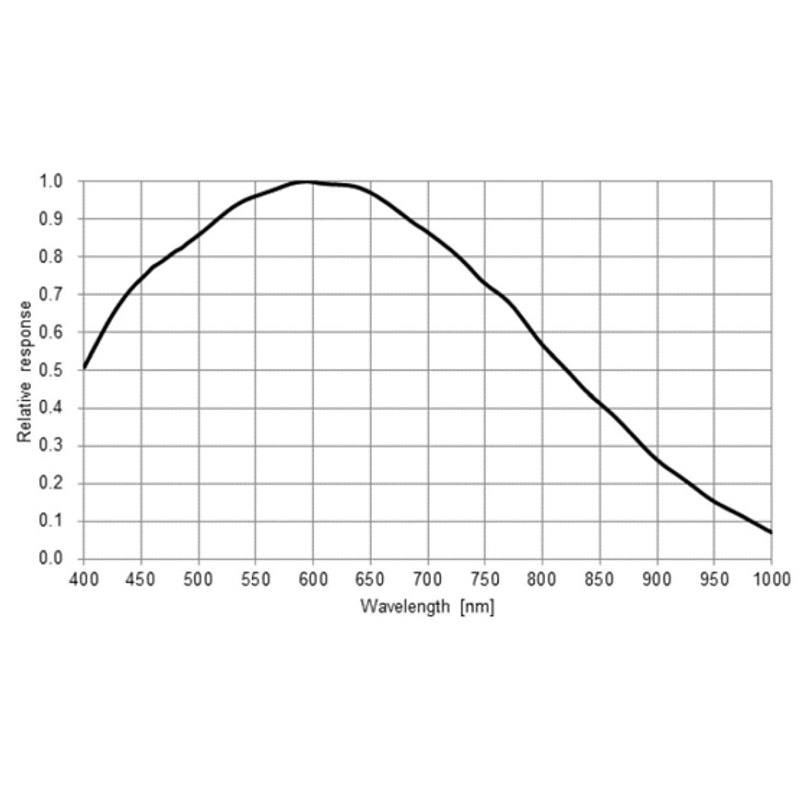
For the color variant (STC-SCS123BCXP62), debayering is performed on the host CPU/GPU rather than in-camera; factor debayering latency and processing load into the cycle-time budget, and select a lighting wavelength that does not bias the Bayer CFA response unevenly if spectral discrimination is critical
Specifications: General
Brand
Omron / Sentech
Camera type
Area Scan
Specifications: Sensor
Resolution
12 MP
Horizontal resolution
4096 × 3000 px
Mono / color
Mono (STC-SBS123BCXP62) / Color (STC-SCS123BCXP62)
Sensor manufacturer
Sony Pregius
Sensor model
Sony IMX253
Shutter
Global Shutter
Sensor size
1.1 inch
Pixel size
3.45 × 3.45 µm
Specifications: Performance
FPS
67 fps (8-bit)
Specifications: Interface
Interface
CoaXPress CXP-6 (2-lane), v1.1.1
Protocols
CoaXPress v1.1.1 / GenICam
Specifications: Optics
Mount
C-Mount
Specifications: Electrical
Power
PoCXP or external +18.5 to +26 V DC
Power consumption
4.7 W
Specifications: Environment
Operating temperature
0 to +45 °C
Specifications: Mechanical
Dimensions
40 × 40 × 45.5 mm
Weight
120 g
Applications this camera is commonly selected for. Open one to see the full recommended hardware and approach.
These steps take an Omron Sentech (STC) camera from the box to a stable first image and on to your own application. They apply across the GigE Vision, USB3 Vision and CoaXPress STC families; the interface only changes how you cable and power the camera.
Download and install the Sentech SDK on the host PC. The package provides StViewer, the viewing and configuration software you use to bring the camera up, and StApi, the programming SDK you integrate later. Because the cameras are GenICam/GenTL-compliant, StApi also registers a GenTL producer, so any GenICam-compliant third-party vision software can discover and drive the camera as an alternative front end.
2. Cable, power and connect the camera
Connect according to the interface. GigE Vision: link to a Gigabit NIC (use PoE or the separate power input) and put the camera and host on the same subnet; for USB3 Vision use a USB 3.x port and a certified cable; for CoaXPress (STC) connect to a CoaXPress frame grabber, which also supplies Power-over-Coax. Then open StViewer and let it enumerate the camera. If a GigE camera does not appear, check the IP configuration and firewall, and on USB3 confirm the host bandwidth and driver.
3. Configure exposure, gain and white balance
Open the device in StViewer and start a live stream. Set exposure and gain for a well-exposed, low-noise image: raise exposure first and only add gain when more light or a faster shutter is not an option, keeping exposure short enough to freeze motion on global-shutter models. On colour cameras, run white balance under your actual production lighting. Adjust the lens aperture and focus on a representative target before tuning anything else.
4. Set the trigger and grab a first image
Start in free-run (continuous) acquisition to confirm a clean, stable image. For inline inspection switch to hardware or software triggering: select the trigger source, set the active edge and any delay, and wire the strobe or illumination to the camera's I/O so lighting fires with each exposure. Acquire and save a frame in StViewer; this saved image is your reference for the SDK stage and for downstream inspection.
5. Move to the StApi SDK (or any GenICam software)
Once the image is stable, reproduce the same settings in code. Use StApi to open the device, apply the GenICam features you validated in StViewer (exposure, gain, trigger, pixel format) and grab frames into your application via the bundled C++, C, C#/.NET or Python interfaces; the included samples are the fastest starting point. Prefer a different stack? The same GenICam/GenTL camera works with third-party vision libraries. With a reliable feed, you can route it into a deep-learning inspection such as Rosepetal for AI-based defect detection.
Frequently asked questions
The camera achieves up to 67 fps in 8-bit mode. Selecting 10-bit (Mono10 / BayerRG10) or 12-bit (Mono12 / BayerRG12) output increases per-frame data volume and will reduce the sustainable frame rate on the 2-lane CXP-6 link; the exact reduction depends on the frame grabber and link configuration, so consult the camera's datasheet for bit-depth vs. frame-rate tables.
Yes — the camera supports PoCXP (Power over CoaXPress), so a single coaxial cable carries both data and power from a PoCXP-capable frame grabber. It also accepts external DC power in the range 18.5–26 V DC if the frame grabber does not provide PoCXP or if a separate power architecture is preferred.
Both variants share the same Sony IMX253 sensor and mechanical body. The STC-SBS123BCXP62 is monochrome (Mono8/10/12 output); the STC-SCS123BCXP62 is the color variant with a Bayer color filter array (BayerRG8/10/12 output). The slug on this page refers to the monochrome model; the color model is a direct sibling with identical interface and mechanical specifications.
The camera uses a standard C-mount. The Sony IMX253 sensor is 1.1-inch in format, so lenses must be specified for a 1.1-inch or larger image circle to avoid vignetting across the full 4096 × 3000 pixel array. Many C-mount lenses are rated for 2/3-inch or 1-inch formats and will not cover the corners adequately at 12 MP.
The camera is GenICam-compliant over CoaXPress v1.1.1, which includes standard trigger and I/O control features. Hardware triggering for synchronisation with conveyors, encoders, or strobe controllers is supported within the GenICam framework; specific trigger input wiring and timing parameters should be confirmed in the camera's hardware integration manual.